
Best Email Marketing Platforms for Australian Businesses (2026): 6 Compared
 Jignesh Vagadiya
09/10/2026
21 min read
Type “best email marketing platform” into Google and you’ll get a dozen lists that all rank the same six tools in a different order, usually sorted by whichever vendor pays the most affiliate commission rather than what actually suits your business. We’ve migrated clients onto most of the platforms on this list, rebuilt broken automation inside a few of them, and watched more than one business sign up for the wrong one because it looked impressive in a sales demo. The demo is never the problem. The problem is always six months later, when the list has grown, the automation needs are more complex than “send a newsletter,” and the monthly bill has crept up without anyone noticing.
This isn’t a sponsored round-up and nobody on this list paid for a mention. We picked six platforms that genuinely turn up in Australian small business shortlists — Mailchimp, Klaviyo, Brevo, ActiveCampaign, MailerLite and Vision6 — and judged them on what actually matters here: real entry pricing (and what happens to that price as your list grows), how deep the automation goes before you hit a paywall, whether ecommerce data like purchase history is built in or bolted on, and whether an Australian business gets local support, local billing or neither. These are, in our hands-on experience, the best email marketing platforms Australia has to offer right now for a business that actually wants to use them, not just sign up for them.
A fair warning before you read on: every platform here has a genuine drawback, not a token one we added for balance. If a “comparison” tells you a tool is brilliant at everything, it’s an affiliate page wearing a review’s clothing. Almost none of these platforms were built with Australia in mind, either — pricing is quoted in USD, most support teams work US or European hours, and data is usually stored offshore unless you specifically check otherwise. None of that rules a platform out, but it’s worth knowing before you commit a year of customer data to one.
One more thing worth saying before the comparisons start: “best” depends entirely on what your business actually does with email. An ecommerce store living and dying by abandoned cart recovery needs a different tool to a consultancy sending a monthly newsletter and the occasional nurture sequence, and a platform that’s genuinely excellent for one of those jobs can be expensive overkill or a frustrating straitjacket for the other. We’ve tried to be specific below about who each platform actually suits, rather than handing out a generic star rating that doesn’t tell you anything useful.
Mailchimp
Mailchimp is the platform most Australian business owners have already used, even if it was years ago and badly. It built its reputation as the easy, friendly entry point into email marketing, and that reputation is still largely earned: the drag-and-drop editor is genuinely simple, the template library is large, and its integration ecosystem (800-plus apps, by Mailchimp’s own count) covers almost anything a small business runs, from Shopify and WooCommerce through to most CRMs and form builders.
Where Mailchimp does well is breadth and brand recognition. If you’ve used it before, or your bookkeeper or web developer already has an account, there’s real value in sticking with something familiar rather than learning a new interface from scratch. Its reporting is clear without being overwhelming, and basic automation — welcome series, abandoned cart, simple segmentation — is included on the paid tiers without needing a separate automation add-on.
Where it falls short is depth and value as your list grows. Mailchimp’s automation builder is noticeably less capable than ActiveCampaign’s once you want branching logic based on real behaviour rather than simple triggers, and its pricing has a well-earned reputation for creeping: the free and entry tiers look generous until your subscriber count crosses a threshold, at which point the next tier can be a meaningful jump rather than a gentle slope. Mailchimp also still counts unsubscribed and cleaned contacts toward some plan limits in ways that catch businesses out, so a list that looks like 2,000 active subscribers can bill like a much bigger one.
Cost: a free tier exists but is limited (roughly 500 contacts and a capped number of monthly sends); paid entry pricing starts around $13–$20 a month for a small list and scales into the hundreds once you’re past a few thousand contacts, billed in USD — check Mailchimp’s own pricing page for current figures before you budget, since tiers shift often. Who it suits: a business that wants one familiar, broadly-integrated tool for straightforward newsletters and basic automation, and doesn’t need deep behavioural segmentation or ecommerce-specific data.
For an Australian business, Mailchimp’s biggest practical risk isn’t the platform itself — it’s complacency. Plenty of businesses set up a welcome email in 2019 and haven’t touched the account since, which means they’re paying a growing monthly fee for a tool doing a fraction of what it could. If you’re already on Mailchimp, it’s worth an honest audit of what automation is actually live before assuming a switch is the answer.
Klaviyo
Klaviyo was built for ecommerce first, and it shows in every part of the product. Connect it to Shopify or WooCommerce and it pulls in real purchase history, browsing behaviour and product catalogue data automatically, which means segments like “bought Product A but not Product B in the last 90 days” or flows like “sent after someone views a product three times without buying” are available almost out of the box, rather than requiring custom development. For an Australian online store, that depth of ecommerce data is the single biggest reason to choose Klaviyo over a generalist platform.
Its automation (Klaviyo calls them “flows”) is genuinely sophisticated: abandoned cart, browse abandonment, post-purchase upsell, win-back sequences and review requests are all template-backed rather than built from a blank canvas, and the segmentation engine lets you combine purchase data, email engagement and custom events into targeting that most other platforms on this list simply can’t match without significant manual setup.
The catch is cost and complexity. Klaviyo changed its billing model in early 2025 to charge based on total active profiles rather than contacts you actually email, which effectively raised the bill for a lot of existing users, and once a profile is unsuppressed it stays billable for 90 days even if you immediately want to suppress it again. The platform is also genuinely built for stores with real purchase volume to analyse; a business with a small, low-transaction list will find Klaviyo’s ecommerce intelligence has nothing to chew on, and will be paying premium pricing for features it can’t yet use. SMS is billed separately again, through credit packs rather than a flat fee, and international SMS routing out of Australia costs meaningfully more than the US-centric examples on Klaviyo’s own pricing page suggest.
Cost: a limited free tier exists (around 250 profiles); paid email plans start at roughly $20 a month for a few hundred profiles and scale steeply with list size — commonly cited figures put a list of around 10,000 profiles at roughly $150 a month for email, with SMS priced as a separate credit-based add-on. Who it suits: Shopify or WooCommerce stores with real transaction volume who want purchase and browse data driving segmentation, rather than a small list sending occasional newsletters.

Brevo
Brevo (the rebranded Sendinblue) is one of the few platforms here that still prices primarily by email volume rather than contact count, which can make it genuinely cheaper for a business with a large list it emails infrequently — a membership organisation or events business with 20,000 contacts who gets one monthly newsletter out, for instance, pays for the sends rather than the list size sitting idle. It’s also one of the more complete “marketing suite” products on this list, bundling email, SMS, a CRM-lite contact view, live chat and transactional email under one account.
Where Brevo does well is value at the low end. The free tier is one of the more usable ones in this comparison — unlimited contacts with a daily send cap, rather than a contact cap, which suits a business building a list before it’s ready to email heavily. The entry paid tier is also genuinely cheap compared to Klaviyo or ActiveCampaign at a similar contact count, and its transactional email and SMS features mean a technical team can run order confirmations and marketing sends from one account rather than two.
The honest drawback is that Brevo’s recent pricing changes have made contact limits a live issue again. Brevo introduced firmer per-plan contact caps in late 2025, which several independent sources (not Brevo’s own marketing) now list on the entry tiers — worth confirming directly before you budget, because the “unlimited contacts” reputation the brand built its name on isn’t quite as unconditional as it used to be. Automation depth is also noticeably shallower than Klaviyo or ActiveCampaign: visual workflow building is there, but the branching logic and ecommerce-specific triggers aren’t as mature, and Brevo is a French company, so data is typically hosted in the EU and support runs on European hours rather than Australian ones.
Cost: a genuinely usable free tier (roughly 300 emails a day, contacts effectively unlimited on free at the time of writing); paid entry pricing starts around $9–$15 a month and scales by email volume rather than purely by contact count, though recent plan changes mean it’s worth checking current contact caps on each tier. Who it suits: a business with a large, infrequently-emailed list, or one that wants email, SMS and basic live chat bundled under one account without paying ecommerce-platform pricing.
ActiveCampaign
ActiveCampaign is the automation specialist on this list, and it’s the one we most often recommend to a service business — a clinic, a consultancy, a trades business — that needs genuinely branching lead nurture rather than a simple drip sequence. Its automation builder lets you combine email engagement, website visits, deal stage in its built-in CRM, and custom events into workflows with real if/then branching, which is a meaningfully different capability to the template-based automation on Mailchimp or Brevo.
Where it does well is the combination of marketing automation and a genuinely usable lightweight CRM in one product. A small sales team can run lead scoring, pipeline stages and automated follow-up sequences without stitching together a separate CRM and email tool, and the platform’s site and event tracking is more granular than most competitors at this price point, which matters if your sales process depends on knowing which page a lead viewed before they called.
The drawback is a learning curve and a price that climbs with both contacts and plan tier simultaneously. ActiveCampaign retired its old “Lite” tier naming and now runs Starter, Plus, Pro and Enterprise tiers, and the automation depth that makes the platform worth choosing in the first place is mostly locked above the entry tier — advanced segmentation, predictive sending and deeper CRM features sit on Plus and above. Because pricing scales by contact count on every tier, a growing list pushes the bill up even if you don’t upgrade tiers, and the interface itself, while powerful, is genuinely more complex to configure than Mailchimp or Brevo; most businesses need a proper setup session rather than a half-hour of clicking around before the automation is actually doing anything useful.
Cost: no free tier; entry pricing (Starter) sits at roughly $15–$19 a month for a small list, with the Plus tier most businesses actually need starting around $49–$59 a month and climbing steeply with contact count — a list of a few thousand contacts on Plus commonly runs $100–$160 a month. Who it suits: a service business or small sales team that genuinely needs branching automation and lightweight CRM functionality together, and is willing to invest proper setup time to get value from it.
MailerLite
MailerLite’s whole pitch is doing less, cleanly. Where ActiveCampaign and Klaviyo compete on how much they can do, MailerLite competes on how quickly a non-technical person can get a decent-looking campaign or a simple automation live without a support call. The editor is fast and uncluttered, the automation builder (while genuinely more limited than the specialists above) covers the common cases — welcome sequences, simple abandoned cart, basic tagging-based segmentation — without demanding a half-day of setup.
Where it does well is price-to-simplicity ratio. The free tier is one of the more generous starting points in this list for a very small business, and the paid tiers remain noticeably cheaper than Klaviyo or ActiveCampaign at equivalent contact counts, which makes it a sensible default for a solo operator, a small not-for-profit or an early-stage business that just needs reliable, clean-looking email without complexity it doesn’t yet need.
The honest drawback is exactly that simplicity ceiling. MailerLite’s automation can’t match ActiveCampaign’s branching logic or Klaviyo’s ecommerce-specific triggers, its reporting is functional rather than deep, and its native ecommerce integrations, while present for Shopify and WooCommerce, don’t bring in the same depth of purchase and browse data that Klaviyo treats as a core feature rather than an add-on. A business that outgrows “send a nice-looking newsletter and a basic welcome series” will hit MailerLite’s ceiling faster than it hits the ceiling on the more expensive platforms.
Cost: a genuinely usable free tier exists (commonly cited at up to 250–500 subscribers and a capped number of monthly sends, depending on current plan terms); paid entry pricing starts at roughly $9–$12 a month for a small list and scales gently compared with the specialists on this list. Who it suits: a small business, solo operator or not-for-profit that wants clean, reliable email and basic automation without paying for depth it doesn’t need yet.

Vision6
Vision6 is the odd one out on this list for one simple reason: it’s Australian, built and supported here, with data stored here. For a business that cares about data residency — a healthcare provider, a financial services firm, a government-adjacent organisation, or simply an owner who’d rather not have customer data sitting on servers in another country by default — that’s not a minor feature, it’s the whole reason to shortlist it. Now operating under Constant Contact’s ownership, Vision6 still runs as a distinct Australian product with local support hours, local phone support on higher tiers, and marketing that leans hard into compliance: SOC2 and ISO 27001 certification get a mention on nearly every page.
Where it does well is exactly that local fit. Billing is in AUD, so there’s no exchange rate surprise on your monthly statement, support responds inside Australian business hours rather than overnight from a US or European team, and because it was built with Australian SMS and email compliance obligations in mind from the start, the Spam Act 2003 consent and unsubscribe handling tends to be more naturally aligned with local rules than a platform built for US CAN-SPAM requirements and retrofitted for everyone else. It also handles batch and transactional sends for both email and SMS from one account, which suits a business that wants order confirmations and marketing newsletters under one roof.
The drawback is reach and polish. Vision6’s integration ecosystem is a fraction of Mailchimp’s or Klaviyo’s, so if your stack includes a less common CRM, ecommerce platform or app, you’re more likely to be building a custom connection or going through Zapier than finding a native integration waiting for you. Its automation, while real, doesn’t match ActiveCampaign’s branching sophistication or Klaviyo’s ecommerce-specific triggers, and because it’s a smaller platform globally, the volume of third-party tutorials, templates and community troubleshooting content is much thinner than you’ll find for Mailchimp. Pricing across third-party listings is also inconsistent at the time of writing, with different directories showing meaningfully different tier prices, so confirming current figures directly on Vision6’s own pricing page before budgeting is worth the five minutes it takes.
Cost: entry pricing commonly starts in the $9–$30 a month range depending on send volume, moving into higher tiers for advanced automation and phone support — third-party listings disagree on exact figures, so treat this as a ballpark rather than a quote. Who it suits: an Australian business for whom local data hosting, AUD billing and local support hours outweigh having the largest integration library or the deepest automation builder on the market.
How to Choose the Right Email Marketing Platform
Start with what your business actually sells and how. If you run an online store with real transaction volume, Klaviyo’s depth of purchase and browse data will outperform a generalist platform almost every time, and the cost difference is usually justified by the abandoned cart and post-purchase revenue it recovers on its own. If you’re a service business — bookings, quotes, consultations — rather than a transactional store, that ecommerce depth is wasted on you, and ActiveCampaign’s branching automation combined with lightweight CRM functionality will do more for your actual sales process.
If budget is the binding constraint and your needs are genuinely simple — a regular newsletter, a basic welcome sequence, nothing more exotic — don’t over-buy. Brevo or MailerLite will do that job cleanly for a fraction of what Klaviyo or ActiveCampaign would charge for capability you won’t use. It’s worth being honest with yourself here: plenty of businesses sign up for an expensive platform “to grow into” and spend the next two years using ten percent of what they’re paying for.
Also worth factoring in is how much setup help you’ll realistically get to, versus pay for. ActiveCampaign and Klaviyo both reward proper configuration — mapped segments, tested flows, cleaned data — far more than they reward simply signing up and sending a campaign. If nobody on your team has the time or inclination to build that properly, either budget for a setup engagement or pick a platform further down the complexity scale where the default configuration already does most of the job. A sophisticated platform running half-configured usually performs worse than a simple one running properly.
If data residency, local support hours or AUD billing genuinely matter to how your business operates or who it serves, weight that more heavily than the feature comparison chart suggests you should. A platform with slightly less automation depth that your team can actually get support for on a Tuesday afternoon, in your own currency, without working around a timezone gap, often delivers more real value than the platform with the longer feature list.
And wherever you land, check the integration with your actual stack before committing, not after. “Integrates with Shopify” or “connects to your CRM” means very different things depending on whether it’s a native, maintained connection or a years-old Zapier or Make workflow someone built once and never revisited. The difference only becomes obvious when it breaks, usually during a sale period when you can least afford it to.
Common Mistakes
Most of the regret we see with email platform choices in Australian businesses traces back to a small set of avoidable decisions made before anyone had actually used the tool with real data and a real list.
- Buying ecommerce-grade depth for a non-ecommerce business — paying Klaviyo-level pricing for a service business that will never use purchase and browse segmentation.
- Ignoring what happens to the price as the list grows — a $15 entry price means little if the same list at 10,000 contacts costs ten times that, and almost every platform on this list scales that way.
- Assuming “unlimited contacts” means what it used to — several platforms have tightened contact caps and billing models over the past year or two; the free or entry tier you read about in an old blog post may not be the one on offer today.
- Treating migration as a weekend job — moving list data, rebuilding automation and reconnecting integrations from one platform to another reliably takes longer than expected, and rushed migrations are where deliverability and data quality problems start.
- Letting the account run on autopilot for years — plenty of businesses set up one welcome email years ago and haven’t touched the automation since, paying a growing monthly fee for a fraction of what the platform can do.
- Skipping the Australian consent and unsubscribe check — the Spam Act 2003 has specific requirements for commercial electronic messages, and a platform’s default opt-in flow built for a different market’s rules isn’t automatically compliant here without checking.
Frequently Asked Questions
What’s the best email marketing platform for a small Australian business on a tight budget?
Brevo and MailerLite are the two most realistic starting points for a budget-conscious business, both offering genuinely usable free or low-cost tiers rather than a crippled trial. Which of the two suits better usually comes down to list size versus send frequency — Brevo’s volume-based pricing favours a large list emailed occasionally, while MailerLite’s simpler, flatter pricing suits a smaller list emailed more regularly.
Is Klaviyo worth the extra cost over Mailchimp for a Shopify store?
For a store with real transaction volume, usually yes. Klaviyo’s native purchase and browse data makes segmentation and flows like abandoned cart and post-purchase upsell considerably more effective than Mailchimp’s more generic automation, and the extra revenue those flows recover often outweighs the price difference. For a very new store with limited sales history, that ecommerce intelligence has little to analyse yet, so the premium is harder to justify until volume builds up.
Do any of these platforms store data in Australia?
Vision6 is the one genuinely Australian-built and Australian-hosted platform on this list. Mailchimp, Klaviyo, Brevo, ActiveCampaign and MailerLite are all built overseas (the US, in most cases, with Brevo based in France), and customer data is typically stored on infrastructure outside Australia unless the vendor offers a specific regional hosting option — worth confirming directly if data residency is a compliance requirement for your business.
How long does it take to switch email marketing platforms?
For a simple list with a handful of basic automations, a careful migration can be done inside one to two weeks, including list import, deliverability warm-up and rebuilding the core sequences. For a business with deep automation — dozens of workflows, ecommerce-specific triggers, extensive segmentation — budget four to six weeks to rebuild and properly test everything before switching sending over completely, and never cut off the old platform until the new one has been running in parallel for at least a couple of sends.
Do I need SMS as well as email, and which platforms handle both well?
It depends on your audience and message type — SMS suits short, time-sensitive messages like booking reminders or shipping updates better than it suits a newsletter. Brevo and Vision6 both handle email and SMS from one account reasonably well; Klaviyo offers SMS but prices and bills it separately through credit packs rather than a flat fee. Whichever platform you use, remember SMS marketing in Australia sits under the same Spam Act 2003 consent obligations as email.
Should I choose based on price or based on features?
Neither in isolation — choose based on the specific job the platform needs to do for your business this year, not a feature checklist. An ecommerce store with genuine transaction volume gets more real value from Klaviyo’s depth than from a cheaper generalist tool, even though it costs more. A service business with a modest list gets more value from MailerLite’s simplicity than from paying for automation sophistication it won’t configure properly. Match the tool to the job, then compare price among the tools that actually fit.
Where to Start
There’s no single winner among the best email marketing platforms Australia has on offer — only the one that matches your list size, your sales process and how much automation depth you’re actually going to configure and maintain. If you’re torn between two or three of these, trial them with a genuine slice of your own list and build one real automation — not the demo template — before deciding. The platform that feels obvious once you’re inside your own data, rather than a vendor’s sample account, is almost always the right call.
Choosing the platform is only the first decision. The return usually comes from what’s built on top of it — welcome flows, abandoned cart recovery, proper segmentation and a clean connection to the rest of your stack — and that’s the part most Australian businesses underestimate when they’re comparing sign-up prices. If you’d like a second opinion on which platform fits your business, or help getting the automation and integrations actually built once you’ve chosen one, our marketing automation team can scope it with you. For the deliverability fundamentals that affect every platform on this list equally, our guide to email deliverability in Australia covers the SPF, DKIM and DMARC setup that determines whether any of these platforms’ emails actually reach the inbox, and our guide to email marketing automation that actually makes money walks through the flows worth building once your platform is chosen. If you’re also evaluating a CRM alongside your email platform, our best CRM for small business Australia comparison is a useful companion read. You can see how we scope and price that kind of work on our automation pricing page.
Keep reading
Related posts
Email Deliverability in Australia: The SPF, DKIM, DMARC and Spam Act Guide for 2026
A practical 2026 guide to SPF, DKIM and DMARC, Gmail and Yahoo's bulk sender rules, and the Spam Act 2003 obligations Australian…
Email vs SMS Marketing: Which Channel Should Your Australian Business Use? (2026)
Email or SMS? Real Australian cost benchmarks, ACMA's new Sender ID Register rules, and a practical framework for which message suits which…
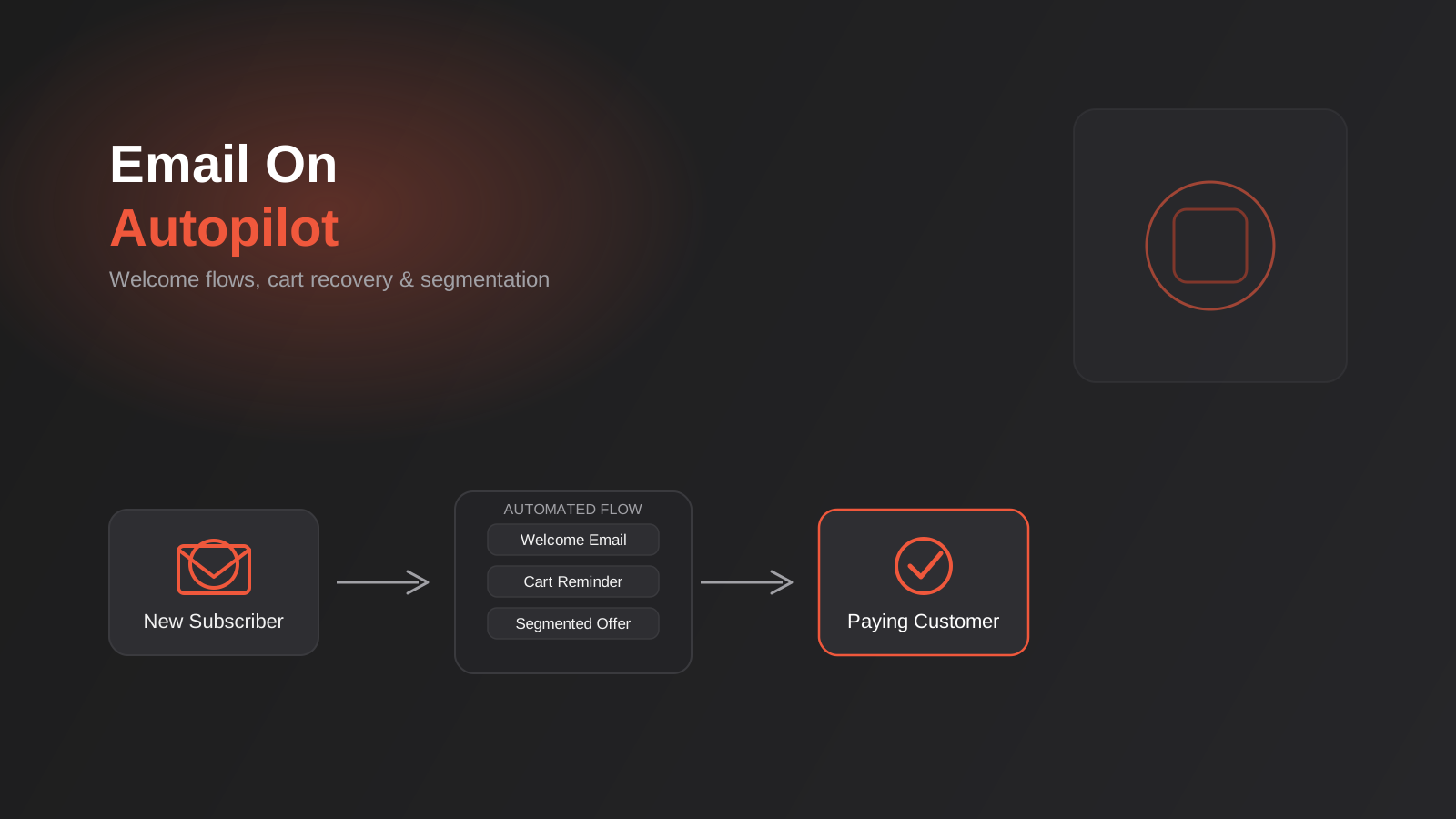
Email Marketing Automation That Actually Makes Money: Welcome Flows, Abandoned Cart and Segmentation for Australian Businesses (2026)
A practical guide to email marketing automation for Australian businesses: welcome flows, abandoned cart recovery, segmentation, compliance and what to measure.
Got a project you'd like to talk through?
Tell us what you're working on — we'll come back with a plan.
