
How to Increase Website Traffic: A Multi-Channel Guide for Australian Businesses (2026)
 Jignesh Vagadiya
21/08/2026
21 min read
Jignesh Vagadiya
21/08/2026
21 min read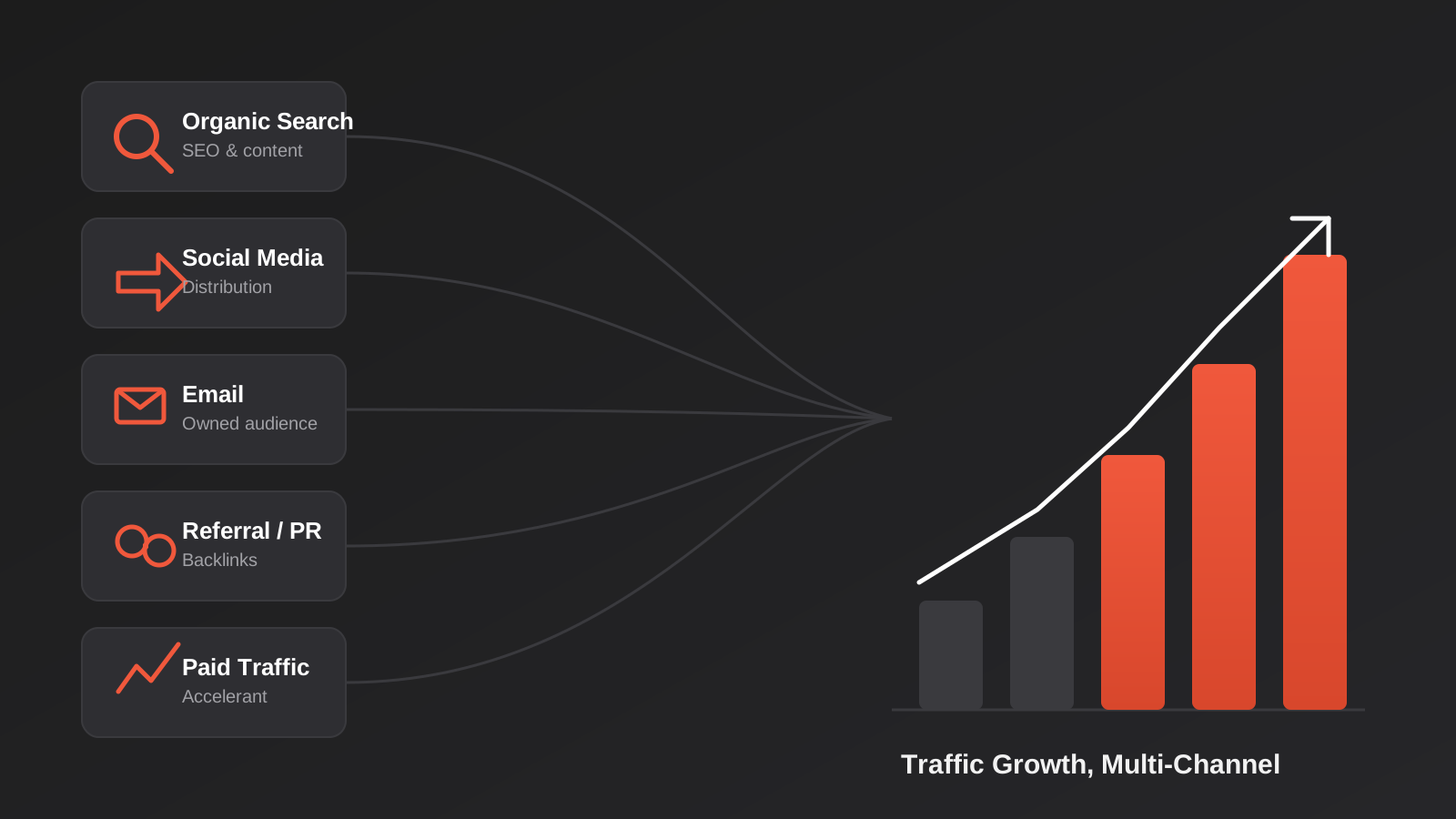
Most conversations about growing website traffic start and end with SEO. That’s understandable — organic search is usually the biggest single source of visits for an established site — but it’s also how a lot of Australian businesses end up with a traffic strategy that’s really just a keyword list and a hope. If your rankings dip, a competitor outspends you, or Google rolls out an algorithm update, your entire growth plan takes the hit at once. We’ve rebuilt traffic for enough clients after a Core Update wiped out 40% of their sessions overnight to know that “rank higher” isn’t a strategy on its own — it’s one lever among several, and the businesses that grow steadily are usually the ones pulling more than one of them at a time.
This guide is about the rest of the picture: the channels beyond organic search that bring qualified visitors to a site, how to build them without spreading your team too thin, and — just as importantly — how to tell the difference between traffic that’s genuinely growing your business and traffic that just looks good on a dashboard. If you’re after a deep technical breakdown of ranking factors or keyword research, we’ve covered that ground already in our SEO content strategy guide and our keyword research guide. Here, we’re zooming out to the full channel mix.
The Traffic Mix Most Businesses Get Wrong
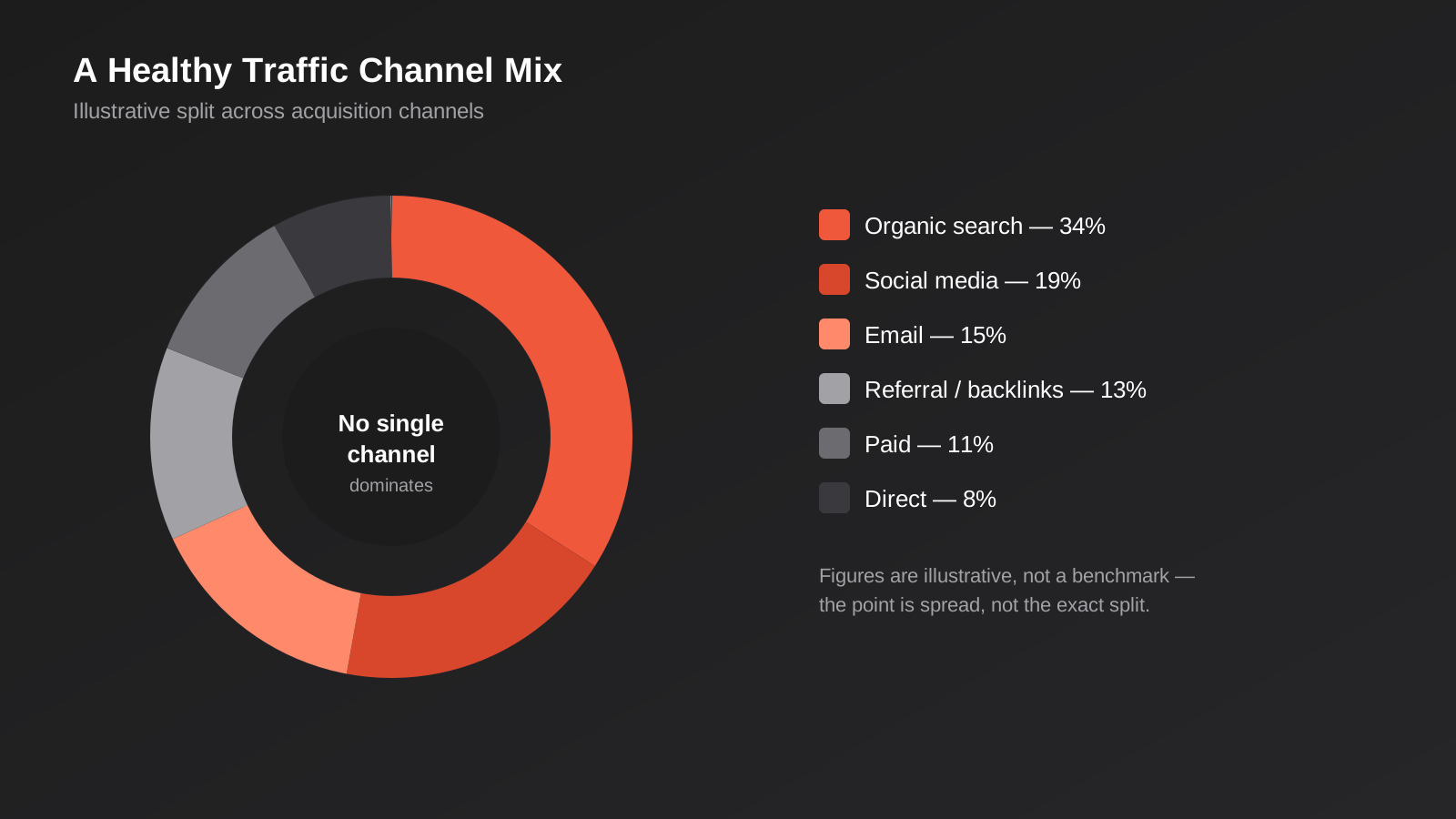
Ask most business owners where their website traffic comes from and you’ll get one of two answers: “Google” or “I’m not sure.” Neither is a great place to build a growth plan from. We’ve sat across the table from plenty of owners who could tell us their monthly visit count to the exact figure but had never once looked at the channel breakdown behind it — and that breakdown is usually where the real story, and the real risk, is hiding. Traffic acquisition works the same way a healthy investment portfolio does — concentration risk is the enemy. A site with 90% of its sessions coming from organic search isn’t necessarily doing anything wrong, but it is one algorithm update, one aggressive competitor, or one technical migration away from a very bad quarter.
What a healthy channel mix looks like
There’s no single “correct” split — a B2B SaaS business and a local trades company will look completely different — but most well-run sites we work with draw meaningful traffic from at least four or five distinct sources: organic search, direct (people typing your URL or using a bookmark, usually a sign of brand recall), referral and backlink-driven visits, email, social media, and paid campaigns when they’re running. When one channel dries up, the others keep the lights on while you fix it.
Why single-channel dependency is risky
We’ve seen this play out in three common ways. First, algorithmic risk: a Google update reshuffles rankings and a site that lived on page one for a handful of head terms suddenly doesn’t. Second, competitive risk: a well-funded competitor starts outspending and out-publishing you in the exact space you’d been quietly winning. Third, platform risk: a business that built its entire audience inside one social platform watches engagement collapse when that platform changes its algorithm or its terms of service overnight. None of these are hypothetical — we’ve fielded calls from prospective clients living through all three. Diversifying channels isn’t about abandoning SEO; it’s about making sure SEO isn’t a single point of failure.
Organic Search Is the Foundation, But It Isn’t the Whole Strategy
We’re not going to relitigate keyword research or content strategy here — we’ve written detailed, practical guides on both of those already, and duplicating them wouldn’t serve you. What’s worth saying briefly is where organic search fits into a broader traffic plan: it’s usually the highest-intent, lowest-cost-per-visit channel available once it’s established, which is exactly why it deserves to be the foundation rather than the entire building. A site with strong technical SEO and a genuinely useful content strategy earns compounding traffic over time — each new page adds to the total rather than replacing what came before, unlike a paid campaign that stops the moment the budget does. It’s also usually the channel worth getting right first, because a site with weak technical foundations — slow load times, poor mobile experience, pages search engines can’t crawl properly — makes every other channel work harder than it should, since paid landing pages, social clicks and email links all eventually route back to the same site.
If you haven’t nailed down your keyword targeting or content approach yet, that’s the right place to start before layering on the channels below — our earlier guides walk through finding the terms worth targeting and turning that research into a publishing plan that actually ranks. Everything that follows in this piece assumes organic is already doing its job, or is at least underway, and is about building the channels around it.
Turning Social Media Into a Distribution Engine
Social media rarely drives huge volumes of direct traffic for most businesses — that’s normal, and it’s not a sign you’re doing it wrong. Its real job is distribution: getting your content, offers and expertise in front of people who wouldn’t otherwise stumble onto your site through search, and building enough familiarity that when they do need what you sell, you’re already on their radar. Treating social as a traffic channel in its own right, rather than just a brand-awareness exercise, changes how you use it.
Native content, not recycled links
The single biggest mistake we see is businesses posting a link to their latest blog post with a one-line caption and wondering why engagement is flat. Most platforms actively suppress posts that push people off-platform, because their business model depends on time spent in-app, not on sending users elsewhere. The fix is to treat each platform as its own content format: pull the most useful insight, statistic or take-away out of the article and post it natively — as a short-form video, a carousel, or a text post — with the link tucked into a comment, bio link, or “read the full breakdown” follow-up rather than the headline act. The click becomes a bonus for people who want more, not the entire pitch.
Consistency beats one viral post
We’d rather see a client post useful, on-brand content four times a week for six months than chase one viral moment. Virality is largely luck-driven and doesn’t compound; a steady publishing rhythm builds an audience that recognises you, trusts you, and eventually clicks through when it matters — when they’re actually ready to buy, not when they’re mid-scroll. If you’re not sure which platforms are worth the effort for your industry, or want a hand building a publishing cadence that doesn’t burn out your team, that’s exactly the kind of thing our social media management service is built around — picking the right platforms for your audience rather than trying to be everywhere at once.
Building an Email List That Actually Drives Repeat Traffic
Email is the most underrated traffic channel we see Australian businesses neglect, largely because it’s not glamorous and the results aren’t as visible as a ranking jump or a viral post. But it’s the one channel where you own the audience outright — no algorithm sits between you and your subscribers’ inbox, and no platform can suddenly change the rules on you. A healthy list, sent to consistently, is one of the most reliable sources of repeat, high-intent traffic a website can have.
Capturing subscribers without wrecking UX
The goal is to make signing up feel like a fair trade, not a tax on reading your content. A full-screen pop-up that fires the instant someone lands on the page, before they’ve read a word, is a conversion killer dressed up as a growth tactic — it annoys the visitors you want to keep and does little for sign-up quality. Better placements: an exit-intent prompt, a slide-in after someone has scrolled through most of an article (a strong signal they found it useful), or a simple inline form at the bottom of high-performing blog posts. Pair the ask with something specific — a downloadable checklist, a template, early access to a report — rather than a vague “subscribe to our newsletter.”
Newsletter content that gets opened
A list is worthless if nobody opens what you send. The newsletters that keep earning opens month after month tend to share three traits: they’re genuinely useful on their own (not just a summary with a link to “read more”), they arrive on a predictable schedule so subscribers expect them, and they’re written like a person wrote them, not like a press release. Every edition is also a traffic opportunity — a well-timed newsletter that links back to a new piece of content, a case study, or a seasonal offer can outperform a social post several times over, because you’re reaching people who already opted in to hear from you. If list growth and newsletter strategy is something you’d rather hand off than build from scratch, it’s one of the core pieces of our email marketing service.
Referral Traffic, Backlinks and Digital PR
Referral traffic — visits that arrive via a link on another website — does double duty. It sends real, often highly qualified visitors directly to your site, and every one of those links is also a signal to Google that other sites vouch for yours, which supports your organic rankings over time. The two goals (traffic now, authority over time) usually point in the same direction, which makes referral-building one of the more efficient uses of time in a multi-channel plan.
Backlinks that send clicks, not just authority
A lot of SEO-driven link building optimises purely for domain authority and forgets that a link is also a doorway. A backlink from a niche industry blog with an engaged, relevant readership can send more actual buyers to your site than a link from a huge but generic publication that nobody clicks through from. When you’re evaluating where to pursue coverage or a mention, ask whether real humans read that page and would plausibly click — not just what the domain’s authority score says.
Guest posting done properly
Guest posting earned a bad reputation over the last decade because it was so heavily abused for cheap links, but done properly it’s still one of the most effective referral tactics available. The difference is targeting and effort: pitch publications your actual customers read, write something genuinely useful rather than thinly disguised promotion, and treat the byline as a chance to demonstrate expertise rather than just plant a link. One well-placed guest article on a publication your industry trusts will outperform a dozen low-quality placements on sites nobody in your audience has heard of.
Digital PR: earning coverage without a media budget
Digital PR is guest posting’s more ambitious cousin — instead of pitching an article, you’re pitching a story, a data point, or an expert opinion that a journalist or publication builds their own piece around. That might mean responding to journalist call-outs with a genuinely useful quote, running a small original survey of your own customers and packaging the findings as a shareable statistic, or commenting on an industry trend while it’s actually newsworthy rather than weeks later. The upside is real: a single piece of coverage on a trusted outlet can send a wave of referral traffic in one day and earn a link that would take months of outreach to secure any other way. The trade-off is that it’s less predictable and more time-intensive than guest posting, so it tends to work best as an occasional push around a genuine news hook rather than a channel you run every week.
Repurposing One Piece of Content Across Every Channel
Most businesses create far less content than they think, because they treat every blog post, video or guide as a single-use asset. A long-form piece of content — a detailed guide, an original piece of research, a client case study — can usually be reshaped into five or six formats without writing anything from scratch again, and each format opens up a different traffic channel.
One asset, five formats
Take a single in-depth blog post as the source material. It can become: a short video or reel summarising the key point for social; a carousel breaking the main steps into slides; a handful of standalone social posts, each pulling one statistic or insight; a newsletter section linking back to the full piece; and, months later, an updated or expanded version that earns a fresh publishing date and another round of promotion. The research and thinking happen once. The distribution work happens across every channel you run, and each format sends a different type of visitor back to the same page — which is exactly the kind of channel spread we opened this guide talking about.
Community and Forum Participation
This is the channel most agencies skip in guides like this one because it doesn’t scale neatly and it’s genuinely time-consuming — but for the right businesses, particularly B2B and niche consumer brands, it’s one of the highest-trust traffic sources available. Communities like relevant subreddits, industry Slack and Discord groups, LinkedIn groups, and specialist forums are full of people actively asking the exact questions your content answers.
Where to actually show up
Start by finding where your existing customers already spend time online rather than guessing. A quick way in: search your core topics on Reddit and forums directly and see which communities keep surfacing. Spend time reading before posting anything — every community has its own tone and its own tolerance for outside links, and getting that wrong burns the opportunity permanently.
How to not get flagged as spam
The rule that keeps people out of trouble in these spaces is simple: answer the question first, link second, and only when it genuinely adds value. A detailed, honest answer with a link at the end for anyone who wants to go deeper reads as helpful. A drive-by comment that’s mostly a link reads as spam, and most communities will remove it or ban the account. Done with restraint, over months rather than days, this channel builds a reputation that other traffic sources can’t — it’s genuinely earned trust, one conversation at a time. It also tends to surface the most useful, unfiltered feedback a business can get about what customers actually struggle with, which is worth almost as much as the traffic itself.
Paid Traffic as an Accelerant, Not a Crutch
Paid advertising belongs in a traffic growth conversation, even though it works differently to every channel above — it’s the one lever you can pull today and see results tomorrow, rather than the compounding, months-long build of organic, referral or community-driven traffic.
When paid makes sense
Paid traffic earns its budget in a few specific situations: filling the gap while a new site or new content is still building organic authority, testing which messaging and offers actually convert before you invest heavily in organic content around them, and driving volume during a defined, time-sensitive campaign or launch. What it shouldn’t be is a permanent substitute for the slower channels, because the moment the budget stops, so does the traffic — nothing compounds. If you’re weighing up paid against the organic and referral work covered above, our pricing page breaks down what each channel typically costs to run properly, which makes the trade-off a lot easier to reason about.
Retargeting your owned channels
One of the most efficient uses of a modest paid budget isn’t cold prospecting at all — it’s retargeting people who’ve already been to your site, opened your emails, or engaged with your social content. These audiences already know who you are, so the cost per click and cost per conversion is typically far lower than targeting a cold audience, and it reinforces every other channel in this guide rather than competing with them for attention. When you’re setting a paid budget, it’s worth ring-fencing a portion specifically for retargeting rather than letting cold prospecting absorb the whole spend — even a modest allocation here tends to outperform a much larger cold campaign on a cost-per-conversion basis.
Vanity Traffic vs Quality Traffic Growth
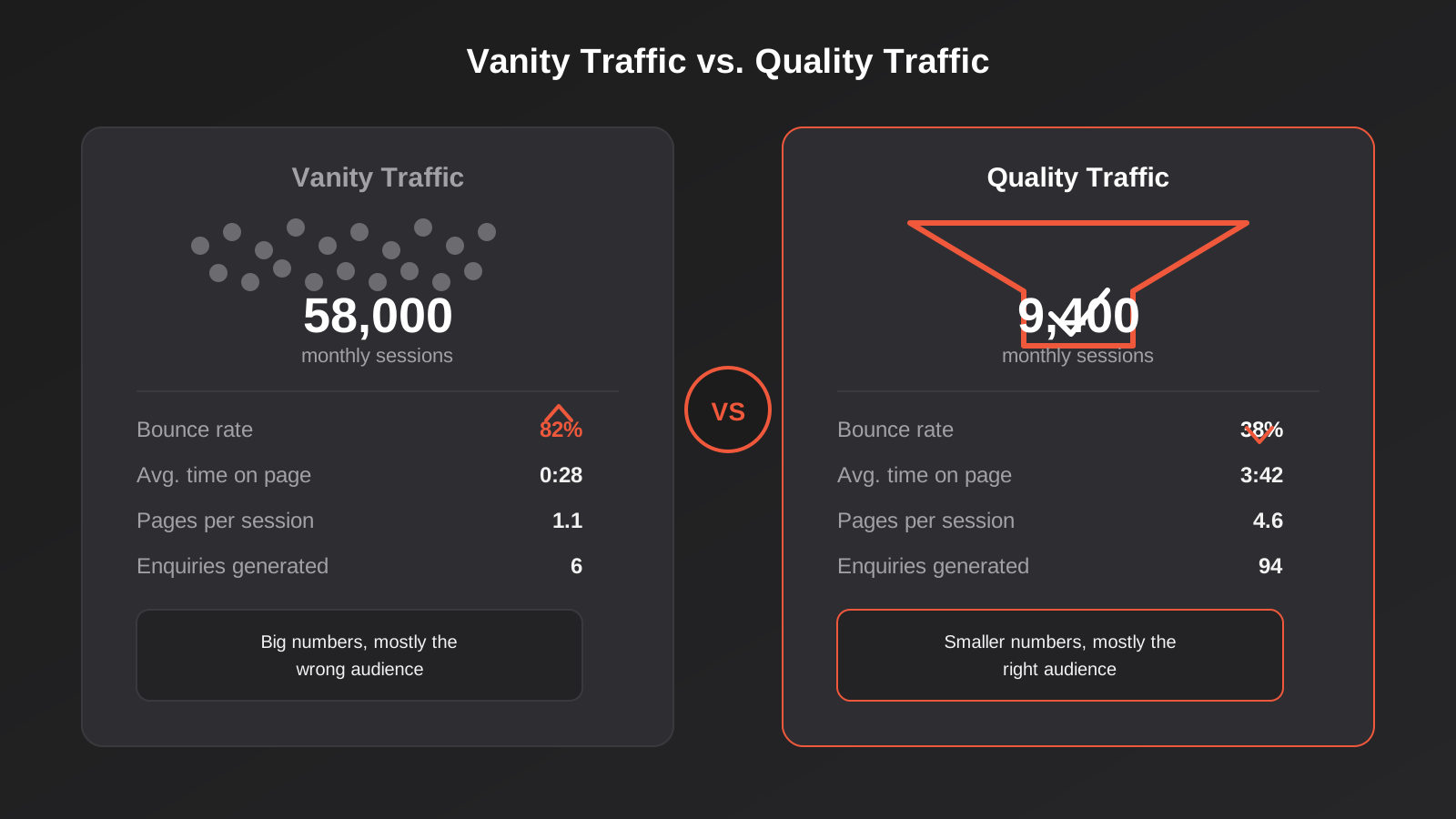
Here’s the part of this guide we think matters more than any individual channel: growing traffic and growing the right traffic are not the same goal, and chasing the wrong one can actively damage your site. It’s entirely possible to double your monthly sessions and end the quarter worse off — more server costs, a diluted analytics picture, and a bounce rate that makes it harder to tell which pages are actually working.
Signs your traffic growth is vanity
A few patterns are worth watching for. Traffic climbs but enquiries, sign-ups or sales stay flat or even drop as a percentage of visits. Bounce rate rises alongside session count, meaning more people are landing and leaving without engaging. Average time on page falls, suggesting visitors aren’t finding what they expected. And the traffic is concentrated in geographies, demographics or search terms that don’t match your actual customer base — a common side effect of chasing broad, high-volume keywords that are only loosely related to what you sell, just because the search volume looked appealing in a keyword tool.
The metrics that actually matter
Session count is a vanity metric until you pair it with what happened after the click. The numbers worth tracking alongside traffic volume: conversion rate (what percentage of visitors take the action you actually want), engaged sessions or average engagement time, pages per session for content-driven sites, and, most importantly, cost or effort per acquired customer by channel — not just by campaign. A channel that brings in fewer visitors but a meaningfully higher conversion rate is usually worth more of your time than one that wins on raw volume alone. If you’re only ever reporting on sessions and impressions, you’re measuring effort, not outcome.
Common Mistakes When Trying to Grow Traffic
Most of these come back to the same root cause: optimising for the traffic number itself rather than for what that traffic is supposed to achieve. A handful show up again and again across the businesses we work with.
- Chasing volume over relevance. Targeting broad, high-search-volume keywords or audiences that only loosely relate to what you actually sell inflates the numbers without moving the business.
- Treating every channel as SEO’s job. Expecting a content or SEO team to also carry social, email and PR usually means all four get done poorly instead of one done well.
- Posting links instead of native content on social. Off-platform links get suppressed by most algorithms, quietly capping reach before it even gets a chance to work.
- Aggressive pop-ups that tank engagement. An email capture that fires before a visitor has read anything trades short-term sign-ups for long-term bounce rate damage.
- Buying backlinks or joining link farms. Search engines are very good at spotting unnatural link patterns now, and the downside — a manual action or algorithmic penalty — is far worse than the upside of a few cheap links.
- Never repurposing content. Publishing once and moving on wastes most of the value already created in the research and writing.
- Turning paid traffic off and on with no plan. Stop-start paid campaigns without a retargeting or nurture layer waste budget re-acquiring the same cold audience every time.
- Reporting on sessions without conversions. A monthly traffic report that never mentions what that traffic actually did is measuring the wrong thing.
- Running every channel at once from a standing start. Spreading a small team across seven channels immediately usually means none of them get done well enough to work — better to build one or two properly before adding more.
Frequently Asked Questions
How long does it take to see an increase in website traffic?
It depends heavily on the channel. Paid traffic can move the needle within days of launching a campaign, because you’re buying visibility rather than earning it. Social media distribution typically shows results within four to eight weeks of consistent posting. Organic search, referral traffic and community-driven growth are slower and more compounding — most sites see meaningful, durable movement over three to six months, with the gains building on themselves rather than stopping when you stop actively working on them. A realistic multi-channel plan usually blends a fast channel with a couple of slower, compounding ones so you’re not waiting months for any movement at all.
Which channel should a small Australian business focus on first?
If organic search isn’t yet established, that’s usually the right starting point because it compounds and doesn’t require ongoing spend once the groundwork is done. Alongside it, email is worth building from day one even at low volume — it’s the one owned channel that doesn’t disappear if an algorithm changes, and every visitor you already have is a potential subscriber. Social and paid are worth adding once you have content worth distributing and a clear sense of who you’re trying to reach.
Is more website traffic always a good thing?
No, and this is one of the more common misconceptions we run into. Traffic that doesn’t convert, doesn’t match your target audience, or arrives and leaves within seconds can actively muddy your analytics, inflate your bounce rate, and make it harder to see which pages and channels are genuinely working. The goal should always be relevant traffic growth, not traffic growth in isolation — a smaller, more engaged audience is usually worth more than a larger, disengaged one.
How much should a business budget for growing website traffic?
This varies a lot by industry, competitiveness and how much of the work is done in-house versus outsourced, so there’s no single figure that applies across the board. What we’d say generally is that a sensible starting point splits budget across at least two or three channels rather than putting everything into one, and treats paid spend as separate from the ongoing cost of content, email and social work. Our pricing page breaks down typical costs by channel, which is a useful starting point for budgeting a realistic mix.
Can social media traffic actually convert as well as search traffic?
Generally, no — and that’s fine, because they’re doing different jobs. Search traffic tends to have higher intent because people are actively looking for a solution when they click. Social traffic is usually earlier in the buying journey, arriving through interruption rather than intent, so it typically converts at a lower rate on the first visit. Its value shows up over time, through repeat exposure and brand familiarity that eventually turns into a direct or search visit when the person is ready to buy. Judging social purely on first-click conversion rate misses most of what it’s actually doing for you.
How do I know if my traffic growth is actually vanity traffic?
Look past the top-line session number to what happens after the click. If traffic is rising but enquiries, sign-ups or sales aren’t moving with it, if your bounce rate is climbing at the same time as your visit count, or if the new traffic is landing on pages that don’t match what your business actually offers, those are all signs you’re growing the wrong kind of traffic. The fix is usually to tighten targeting — more specific keywords, more relevant content topics, more precisely targeted social and paid audiences — rather than simply doing more of what’s currently driving the volume.
How many traffic channels should a business try to run at once?
Fewer than you’d think, at least to start. Two or three channels run properly — enough time, enough budget, someone actually accountable for each one — will consistently outperform six channels run at 20% effort each. A sensible approach is to get organic search and one owned channel like email working well first, then add social, referral or paid one at a time as capacity allows, rather than launching everything simultaneously and hoping it all sticks.
Where to Start
If you’ve read this far and you’re not sure where your own traffic mix stands, that’s the honest starting point for most businesses — you can’t fix concentration risk you haven’t measured. Pull up your analytics, look at where your last quarter of sessions actually came from, and be honest about how many of those channels you could lose overnight without it hurting. If the answer is “basically just one,” that’s your priority, not necessarily the channel that feels most exciting to work on.
From there, pick one or two channels from this guide to build properly rather than trying to run all seven at once — a half-built presence on every channel usually underperforms a genuinely solid presence on two or three. It’s a slower-feeling way to start, but it’s the version that’s still paying off in a year rather than one that quietly stalled after the first month. We work with Australian businesses across SEO, social media, email, and paid to build exactly this kind of resilient, multi-channel traffic strategy, so if you’d rather talk it through than build it alone, we’re happy to have that conversation.
Keep reading
Related posts
Digital Marketing for Car Dealerships and Workshops in Australia (2026)
Digital marketing for Australian car dealerships and workshops: local SEO, Google Ads, booking flows, and the price-advertising rule every dealer must follow.
Digital Marketing for Australian Manufacturers: Turning Visitors Into RFQs (2026)
How Australian manufacturers turn website visits into RFQs: capability pages, product SEO, LinkedIn Ads for procurement buyers, and quote automation.
Marketing for Recruitment Agencies in Australia: Winning Both Clients and Candidates
Recruitment agencies sell to two audiences at once. How SEO, LinkedIn Ads, job board strategy and compliance need to split between employers…
Got a project you'd like to talk through?
Tell us what you're working on — we'll come back with a plan.
