
How to Create SEO Content That Actually Ranks: A Practical Guide (2026)
 Jignesh Vagadiya
19/08/2026
21 min read
Jignesh Vagadiya
19/08/2026
21 min read
Most businesses that come to us with a content problem don’t actually have a writing problem. They have a strategy problem wearing a writing costume. They’ve published forty blog posts, hired a freelancer, maybe even paid an agency for “SEO content,” and rankings haven’t moved. The pages read fine. The grammar is clean. Nothing is technically wrong with them — and nothing is technically right, either. This guide is about the difference. We’re not going to rehash what content marketing is or why Google likes it — you already know that. We’re going to walk through how we actually plan, brief, structure, and maintain SEO content that ranks and stays ranked, based on what we’ve seen work (and fail) across dozens of client sites. For how content fits into the bigger SEO picture, see our SEO guide for Australian businesses.
Why “Good Content” and “SEO Content” Aren’t the Same Thing
A well-written article and a piece of SEO content that ranks are not automatically the same thing, and conflating the two is where most content strategy goes wrong. Good writing is judged on clarity, voice and structure. SEO content is judged on all of that plus one more question: does it satisfy what someone typed into Google well enough, faster than the alternatives, and with enough authority signal that Google is willing to bet its own reputation on showing it? You can write a beautiful 2,000-word article that fails that test completely, because it answers a question nobody asked, or answers the right question in the wrong format, or answers it well but on a domain Google has no reason to trust yet.
This matters because most content strategy documents skip straight to “what should we write about” without ever nailing down “what does this page need to do, for whom, and why would Google choose it over the twenty other pages already ranking.” Everything in this guide sits underneath that one question.
Start With Search Intent, Not Keywords
Keyword research tells you what people type. It doesn’t tell you what they want when they type it, and that gap is where most content strategy for SEO quietly falls apart. Two searches can share the exact same keyword and want completely different pages. “Content marketing agency” could mean someone doing early research, or someone three demos deep and ready to buy. If your page guesses wrong, no amount of on-page optimisation will save it — Google’s ranking systems are explicitly built to detect intent mismatch and demote pages that don’t match it, no matter how well they’re written.
The Four Types of Search Intent
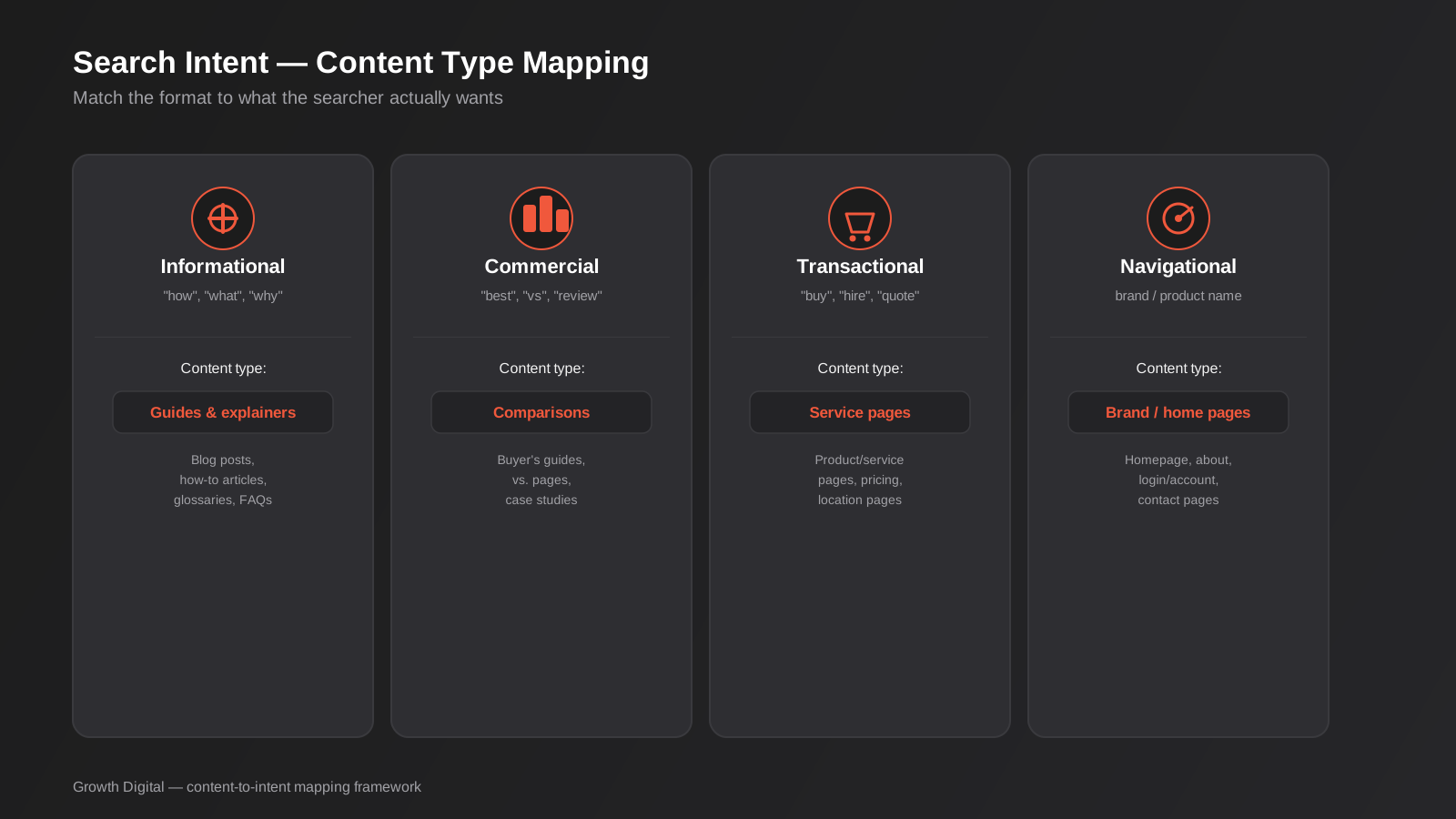
We map every keyword we work with into one of four buckets before a single word gets written:
- Informational — the searcher wants to learn or understand something (“what is a content brief”). They are not ready to buy and a hard sell here reads as tone-deaf.
- Commercial investigation — they know roughly what they want and are comparing options (“best SEO content agency Melbourne”). They want evidence, not a pitch.
- Transactional — they’re ready to act (“hire SEO content writer,” “SEO content pricing”). This is where service and pricing pages belong, not blog posts.
- Navigational — they’re looking for a specific brand or page they already have in mind. If you’re not that brand, don’t chase this intent.
The practical value of this framework is that it stops teams writing the wrong content type for the right topic. We regularly see businesses build a 3,000-word “ultimate guide” targeting a keyword that Google’s results page makes obvious is transactional — every top result is a service or pricing page, not an article. No guide, however well-researched, beats a service page for that kind of query, because it’s solving the wrong problem for the searcher.
How to Audit Intent Before You Write a Word
Before we brief any piece of content, we manually check the current results for the target keyword and note three things: the dominant content format (guide, listicle, comparison, product page, tool), the dominant intent signal in the top five results, and whether there’s a mix of intents (which usually means the keyword is broad enough to need splitting into two separate content pieces rather than one page trying to serve everyone). This fifteen-minute check saves weeks of writing content that was never going to rank because it was fighting the wrong kind of results page.
Keyword-to-Content Mapping
Once intent is understood, the next job is deciding which page on your site — existing or new — owns which keyword. This is the part of content strategy that spreadsheets are actually good for, and skipping it is one of the most common reasons content strategy for SEO produces overlapping, competing pages instead of a coherent site. If you haven’t built that keyword list yet, our keyword research guide walks through how to do it properly before mapping it to pages.
Mapping Keywords Across the Funnel
We build keyword-to-content maps in three funnel stages, and every keyword we’re targeting gets assigned to exactly one:
- Top of funnel — broad, informational, high-volume terms that build topical authority and bring in people who don’t know you yet. These live as blog content, guides and resources.
- Middle of funnel — comparison, “how to choose,” “vs” and process-related terms. These live as comparison pages, in-depth guides, or supporting content linked directly from service pages.
- Bottom of funnel — service, location and pricing terms with clear buying intent. These live as core commercial pages, not blog posts, and quality content here means concrete detail — process, pricing structure, timelines — not persuasive fluff.
The map isn’t a one-off exercise. We keep it live and update it every time we plan new content, because the fastest way to waste a content budget is writing something that already has a home on the site, just under a slightly different title.
Avoiding Keyword Cannibalisation
Cannibalisation happens when two or more pages on the same site are both trying to rank for the same or very similar keyword, and Google can’t decide which one to trust, so it splits ranking signal between them and both underperform. We see this constantly on sites that have been publishing content for years without a map: a “content marketing tips” post from 2022, a “content strategy guide” from 2023, and a “how to create SEO content” page from this year, all quietly competing with each other. Before publishing anything new, we run a quick site search (`site:yourdomain.com “target keyword”`) and check Search Console’s existing impressions for that phrase. If something’s already ranking, even weakly, the right move is usually to strengthen that page rather than launch a new competitor to it.
A pattern we see often: a site has a well-ranking “digital marketing services” page and then publishes a blog post titled “What Are Digital Marketing Services” targeting almost the same phrase. Individually, both pages look reasonable. Together, they’re fighting each other for the same query, and Search Console will usually show both pages ranking somewhere in positions eight to fifteen instead of one of them holding position three. The fix isn’t always deletion — often it’s differentiating the two pages properly (one commercial, one informational, linked to each other) or consolidating them into a single stronger page and redirecting the weaker one.
Building a Content Brief That Actually Works
A content brief is the single highest-leverage document in a content strategy, and it’s the piece most businesses skip or do badly. A weak brief says “write 1,500 words about email marketing.” A working brief gives a writer — human or otherwise — everything they need to produce something that can compete on page one without a rewrite.
What Goes Into a Proper Brief
Every brief we write for SEO content includes the same core elements, because skipping any one of them tends to show up as a specific, predictable weakness in the finished draft:
- Primary keyword and intent classification — so the writer knows what job the page is doing, not just what topic it’s covering.
- Secondary and related terms pulled from real “people also ask” data and competitor content gaps, not a keyword tool’s raw list.
- Target word count range, based on what’s actually ranking for the term — not a fixed house number applied to every brief regardless of topic.
- A working heading structure, built from analysing what the current top-ranking pages cover that we should cover too, and just as importantly, what they’re missing that we can own.
- The searcher’s actual question, written in plain language, so the writer is answering a person rather than optimising for a phrase.
- Internal linking targets — which existing pages this content should link to, and which pages should eventually link back to it.
- Tone and audience notes, specific to the business, not generic “professional but friendly” boilerplate that could apply to any client.
A brief like this takes thirty to sixty minutes to build properly. It saves hours of editing later, and it’s the difference between quality content that was planned to rank and content that merely exists.
On-Page Content Structure That Ranks
Structure is not decoration. It’s how both readers and search engines parse whether a page is worth their time, and it directly affects whether your content earns a featured snippet, an AI Overview citation, or neither.
Headings, Scannability and the Inverted Pyramid
Good SEO content structure borrows from journalism’s inverted pyramid: the most important, most directly useful information comes first, with supporting detail and nuance following after. Headings should read as a standalone outline — someone skimming just the H2s and H3s should understand the shape of the whole answer. This isn’t just good practice for humans; it’s exactly how search engines and AI answer engines parse a page’s structure to decide what to extract and cite. A page with headings like “Some Thoughts on Content” tells a crawler nothing. A page with “How to Build a Content Brief in Six Steps” tells it everything.
Paragraphs should be short — two to four sentences in most cases — because dense blocks of text get skipped by scanning readers regardless of how good the writing inside them is. Lists, tables and bolded key terms aren’t just formatting flourishes; they’re how you signal to both readers and machines which parts of the page carry the actual answer.
Answering the Query Above the Fold
One of the most consistent patterns we see across ranking content is a direct, complete answer to the core query within the first one hundred words — before the throat-clearing, before the “in today’s digital landscape” preamble. This matters more now than it did even two years ago, because AI-generated overviews and answer boxes pull directly from early, clearly-stated answers. Content that buries its actual answer three screens down, after a long stall for “engagement,” is exactly the kind of content that AI Overviews skip over in favour of a competitor that answered plainly. Say the thing. Then support it.
Schema, Snippets and Answer Engines
Structured data won’t make a mediocre page rank, but it does make it easier for search engines and AI answer tools to understand exactly what a well-structured page is offering. Article schema, FAQ schema and How-To schema all give crawlers a clean, machine-readable map of your content that mirrors the heading structure you should already be using. We treat schema as a confirmation layer, not a shortcut — it works best when it accurately describes content that’s already organised the way it claims to be. A page with FAQ schema wrapped around vague, half-answered questions won’t out-rank a genuinely thorough competitor; it’ll just get ignored once the mismatch becomes obvious. Where schema earns its keep is in winning the format Google chooses to display: a properly marked-up FAQ section is far more likely to surface as an expandable result or get pulled into an AI Overview than the same content with no markup at all.
E-E-A-T in Practice, Not Just Theory
E-E-A-T — Experience, Expertise, Authoritativeness, Trust — gets talked about constantly in SEO circles and applied rarely, because most advice stops at defining the acronym rather than explaining what to actually change on the page. Here’s what it looks like in practice.
Experience Signals You Can Actually Add
Experience is the newest addition to the framework and the easiest to fake badly or demonstrate well. It’s the difference between “content marketing can improve your rankings” (true of every page ever written on the topic) and “when we refreshed a client’s cornerstone guide with updated screenshots and current pricing, organic traffic to that page grew 40% over the following quarter” (something only someone who actually did the work could write). Original photos, screenshots of your own process, specific numbers from your own campaigns, first-person observations that read as lived rather than researched — these are what separate content written by someone with genuine hands-on experience from content assembled from other people’s articles.
Authoritativeness and Trust Signals
Authoritativeness compounds across a site rather than living on a single page. Author bios with real credentials, a consistent publishing history on a topic, other sites linking to your content because it’s genuinely useful (not because you asked nicely), and internal links from your other authoritative pages all build this over time. Trust is more immediate and more easily damaged: accurate information, clear sourcing when you cite data, transparent business details, and content that doesn’t overpromise. A single outdated statistic or a broken claim can undercut months of authority-building, which is exactly why the refresh strategy later in this guide isn’t optional for content that matters.
AI-Assisted Content Creation: Done Properly vs Badly
We use AI tools in our own content process, and we’re not going to pretend otherwise — pretty much every agency and in-house team does now, whether they admit it or not. The distinction that actually matters isn’t “AI vs no AI.” It’s whether AI is used to accelerate research and drafting under human direction, or used as a substitute for having a point of view at all.
Done badly, AI-assisted content looks like this: a vague prompt (“write a blog about content marketing”), a first draft published with minimal editing, generic advice that could apply to any industry, no original data or experience woven in, and headings that read like they were generated to fill a template rather than to answer a specific question. This kind of content is increasingly easy for both readers and search engines to spot, and it tends to rank poorly precisely because it adds nothing that wasn’t already better-covered by an existing page. Google has been explicit that the issue isn’t the production method, it’s whether the content is genuinely useful — but in practice, low-effort AI content and low-usefulness content are very often the same content.
Done properly, it looks more like this guide: a detailed brief built from real keyword and intent research, a first draft assisted by AI tools but built around specific expertise, examples and opinions that only come from doing the work, a thorough human edit for accuracy and voice, and a final structure designed around what the searcher actually needs rather than what’s easiest to generate. AI is genuinely useful for outlining, summarising research, drafting variations of a headline, or handling the repetitive parts of production — meta descriptions, alt text, internal link suggestions. It’s not a replacement for the strategic thinking in the sections above it, and content strategy that treats it as one shows up in the results within a few months.
Content Refresh and Pruning Strategy
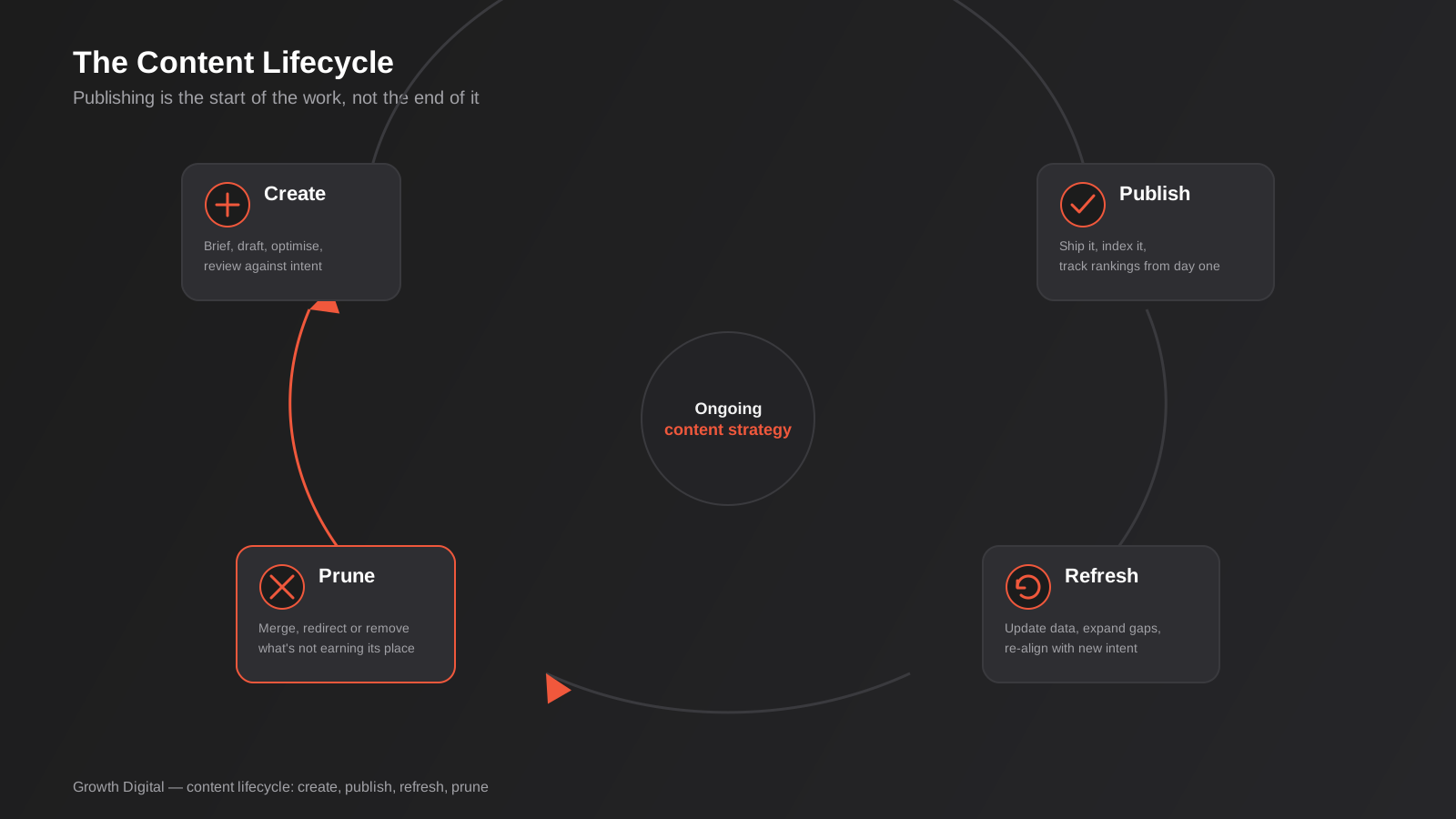
Publishing is the beginning of a content’s life, not the end of the work on it. Search results shift, competitors publish better content, statistics go stale, and pages that ranked well eighteen months ago quietly slide as everything around them moves. A content strategy without a refresh and pruning plan is a strategy that guarantees its own decay.
When to Refresh vs When to Prune
We review content performance quarterly and sort underperforming pages into one of three buckets:
- Refresh — the page targets a keyword that still matters, still gets search volume, and the underlying topic is sound, but the content is dated, thin, or has been outranked by more comprehensive competitors. Update statistics, expand thin sections, tighten the structure, add anything the current top-ranking pages cover that yours doesn’t, and update the publish date once the content genuinely changes — not as a cosmetic trick.
- Consolidate — two or more pages cover overlapping ground and are splitting ranking signal between them. Merge the strongest content from each into one authoritative page and 301-redirect the others into it.
- Prune — the page targets a keyword with no real search demand, was written for a service you no longer offer, or simply never had a reason to exist. Low-value, thin, outdated pages sitting on a site can drag down how search engines assess the site’s overall quality. Redirect if there’s any equity worth preserving; otherwise remove it cleanly.
The sites we see with the healthiest long-term organic growth aren’t the ones publishing the most new content — they’re the ones treating their existing content library as a maintained asset rather than a growing archive.
Measuring Content ROI
“Did the blog post do well” is not a measurable question, and most businesses only ever ask it in that form, which is why content marketing budgets get cut the moment someone senior asks for a number. Measuring content ROI properly means tracking a chain of metrics, not just one.
We track content performance at three levels. First, visibility metrics — rankings for target keywords, impressions and click-through rate from Search Console, and whether the page is being cited in AI Overviews or answer engines where relevant. Second, engagement metrics — organic sessions, time on page, scroll depth and internal click-throughs, which tell you whether the content is actually satisfying the people who land on it, not just attracting them. Third, and most important for justifying budget, business metrics — assisted conversions, goal completions influenced by that content in the customer journey, and where possible, revenue or leads attributable to organic traffic through that page.
The honest answer for most content is that individual blog posts rarely convert directly and shouldn’t be judged as if they should. Their job is usually to build topical authority, earn internal links to commercial pages, and capture demand earlier in the funnel. What should be judged directly on conversion are the bottom-of-funnel, transactional pages this content strategy is ultimately built to support. If you can’t draw a line from a piece of content to either rankings movement, assisted conversions, or support for a commercial page, it’s worth asking honestly whether that content earns its place — which loops straight back into the pruning strategy above.
One attribution mistake worth flagging: judging a piece of content on last-click conversions alone will almost always undersell it. Someone who reads an informational guide in January and converts through a service page in March, after two more visits and an email, should still count as a result the guide helped produce. Google Analytics’ data-driven and position-based attribution models handle this better than last-click, and it’s worth setting one of them as your default view before drawing conclusions about which content is or isn’t working — otherwise you’ll end up quietly defunding the exact top-of-funnel content that’s feeding your pipeline.
Common Content Mistakes We See
These show up constantly in content audits, across industries and business sizes:
- Writing for the keyword instead of the searcher — stuffing a phrase in unnaturally instead of answering the actual question behind it.
- No brief, or a brief that’s just a title and a word count — leaving the writer to guess at intent, structure and audience.
- Publishing and forgetting — no refresh schedule, so content quietly decays for years without anyone noticing.
- Competing with your own pages — multiple articles targeting near-identical keywords with no map to prevent overlap.
- Burying the answer — long, scene-setting introductions that delay the actual value the searcher came for.
- Treating every keyword as a blog post — even clearly transactional, bottom-of-funnel terms.
- No internal linking strategy — new content published as an island, with no links in or out to build topical structure.
- Chasing volume over quality content — a publishing calendar built around frequency targets instead of what the site’s map actually needs next.
- Generic AI drafts published with light or no editing — no original experience, data or point of view added.
- Ignoring what’s already ranking — writing content that ignores the format and depth of the pages currently occupying page one for that term.
Frequently Asked Questions
How long does it take for new SEO content to rank?
For most Australian small-to-medium business sites, expect three to six months before well-optimised content shows meaningful movement, and longer for competitive commercial terms. Domain authority, competition level, and how well the content matches search intent all affect the timeline. Content that’s part of a coordinated keyword-to-content map tends to move faster than isolated pieces, because it benefits from internal linking and topical relevance the moment it’s published rather than building authority from zero.
How much content should a business publish each month?
There’s no universal number, and chasing one is how businesses end up with thin, forgettable content. We’d rather see two well-briefed, properly structured pieces a month that each target a gap in the keyword map than eight rushed posts with no strategic reason to exist. Consistency matters more than volume, and quality content that actually gets refreshed outperforms a large archive of neglected posts over any meaningful time frame. If you’re weighing content production costs against the rest of your SEO budget, our SEO pricing page breaks down what’s typically included at each tier.
Is AI-written content bad for SEO?
Not inherently — the production method isn’t what search engines penalise. What gets penalised, in practice, is unhelpful content, and low-effort AI drafts published without real editing, original insight or fact-checking tend to be exactly that. Used as a drafting and research tool inside a proper content strategy, with human expertise and editing layered on top, AI can speed up production without hurting quality. Used as a replacement for strategy and expertise, it produces content that’s easy for both readers and algorithms to identify as generic.
What’s the difference between a content strategy and a content calendar?
A content calendar is a publishing schedule — what goes out and when. A content strategy is the reasoning behind it: which keywords matter, who owns which topic on the site, what intent each page is built to satisfy, and how existing content gets maintained over time. A lot of businesses have a calendar and call it a strategy. Without the keyword-to-content mapping and intent work behind it, a calendar just decides the order in which unrelated pieces of content get published.
Should every page target only one keyword?
Every page should have one primary keyword and intent it’s built to satisfy, but it will naturally rank for dozens or hundreds of related terms and variations if it thoroughly answers that primary query. The mistake isn’t ranking for multiple terms — that’s a sign of a strong, comprehensive page. The mistake is deliberately building two separate pages to target two very similar primary keywords, which splits authority instead of consolidating it.
How do I know if my existing content needs a refresh or a rewrite?
If the core topic and keyword are still relevant but the content is outdated, thin in places, or has been outranked by more comprehensive competitors, a refresh — updating data, expanding gaps, tightening structure — is usually enough. If the original angle or structure no longer matches what’s ranking, if search intent for the term has shifted since it was written, or if the page was poorly planned from the start, it’s often faster and more effective to rewrite it against a proper brief than to patch it repeatedly.
Where to Start
If you take one thing from this guide, make it this: don’t start with a blank document and a keyword. Start with a map. Pull your existing content into a spreadsheet, note what keyword and intent each page is actually serving today, find the overlaps and the gaps, and only then decide what needs writing, refreshing or removing. That single exercise, done properly, tends to surface more quick wins than a month of new content would.
If your content strategy currently amounts to “publish something every couple of weeks and hope,” we’d be glad to help you build a proper keyword-to-content map, brief your next round of content, or audit what’s already live and tell you honestly what’s earning its place and what isn’t. Get in touch with the Growth Digital team and we’ll walk you through what that looks like for your site.
Keep reading
Related posts
Psychology Practice Marketing in Australia: Local SEO, Compliant Copy and the Waitlist Problem (2026)
How Australian psychology practices handle local SEO, AHPRA-compliant copy and waitlist triage when they're already at capacity (2026).

Physiotherapy Marketing in Australia: Local SEO, Website Design and Booking (2026)
How Australian physiotherapy clinics win new patients through Google Business Profile, local SEO, website design and real-time booking in 2026.
Local SEO for Veterinary Clinics in Australia: Google Business Profile, Reviews and the Emergency Search (2026)
Veterinary clinic SEO explained: Google Business Profile, review generation and the emergency search most vet websites get wrong.
Got a project you'd like to talk through?
Tell us what you're working on — we'll come back with a plan.
