
Digital Marketing Expectations vs Reality: What Actually Happens When You Invest (2026)
 Jignesh Vagadiya
21/08/2026
21 min read
Jignesh Vagadiya
21/08/2026
21 min read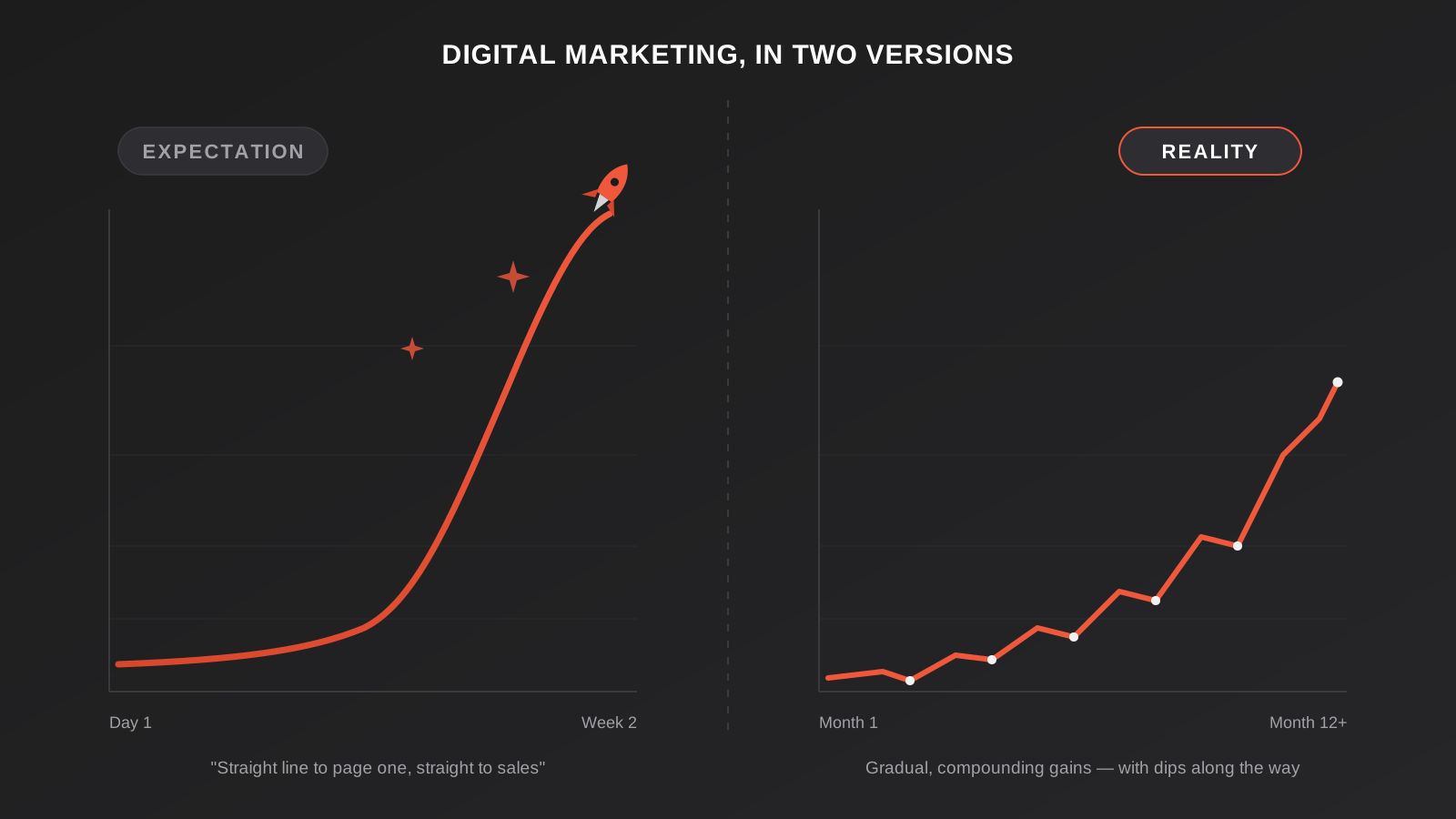
Every business owner who invests in digital marketing for the first time carries a mental picture of how it’s supposed to go. A campaign goes live, the phone starts ringing, and within a month the investment has paid for itself several times over. It’s an understandable picture — it’s also almost never how the first few months actually unfold, and when the gap between the picture and the process isn’t explained upfront, it’s usually the marketing that gets blamed, not the timeline.
We’ve had this conversation hundreds of times with Australian small and medium businesses, and the pattern is consistent. Someone signs on for SEO, Google Ads, Meta Ads, or some mix of the three, and within three or four weeks they’re asking why the phone isn’t ringing off the hook. The honest answer is rarely that the strategy is wrong. It’s that the expectation was set by marketing itself — by case studies that skip the slow middle months, by “our clients doubled revenue in 90 days” headlines, and by a general assumption that anything digital should move at the speed of the internet.
This isn’t a sales pitch dressed up as an article. It’s the version of this conversation we wish more agencies had before taking a client’s money, not after. Below is a grounded look at what digital marketing actually involves in 2026 — the timelines, the effort, the cost, and the metrics that actually matter — so that whoever you end up working with, you’re going in with your eyes open.
It’s also a particularly relevant conversation for the Australian market specifically. Most local industries are small enough that a handful of competitors can meaningfully move the auction, and large enough — even in regional cities — that “just be findable” isn’t a strategy on its own anymore. Australian consumers research online before almost every purchase over a modest value, comparing options across Google, social platforms and reviews before ever making contact. That means the businesses winning today aren’t necessarily the ones spending the most; they’re the ones whose expectations were calibrated correctly from the start, who didn’t pull the plug in month two, and who built a presence across more than one channel instead of betting everything on a single tactic.
Why Expectations and Reality Rarely Match
Part of the mismatch is structural. Digital marketing is sold in a market that rewards the biggest promise, not the most accurate one. An agency that says “SEO takes six to twelve months to show meaningful results” sounds less exciting on a sales call than one that implies faster wins, even if the second agency is quietly optimising a client’s budget toward paid channels to manufacture early wins while the SEO groundwork is still being laid. Neither approach is dishonest exactly, but the framing shapes what a business owner expects — and expectations set in week one tend to outlast the facts that should update them.
The other part is that most business owners haven’t seen how marketing actually gets built from the inside. They’ve seen the outputs — ads in their own social feed, competitors ranking on Google, a friend’s business “blowing up” online — without seeing the eighteen months of testing, budget waste, content production and technical fixes that usually sit behind those outputs. When you’ve only ever seen the finished result, it’s natural to assume the process is faster and simpler than it is.
None of this means digital marketing doesn’t work, or that timelines are an excuse for poor performance. It means the honest starting point is a realistic map of what happens between “campaign launched” and “this is now a meaningful, repeatable source of revenue” — which is what the rest of this guide is.
Misconception 1: “We’ll See Results Almost Immediately”
This is the single most common expectation we have to reset, and it’s understandable — almost everything else in a business moves faster once you invest in it. Hire a salesperson and they can be booking meetings within a fortnight. Run a sale and revenue moves that weekend. Digital marketing doesn’t behave the same way, and the reason differs depending on the channel.
What Actually Happens With Paid Ads
Paid advertising is the closest thing to “instant” in digital marketing, and it’s also the channel most likely to be misunderstood in the opposite direction — assumed to be profitable from day one simply because traffic starts flowing immediately. Google Ads can put your business in front of people searching for what you sell within hours of a campaign going live. But there’s a difference between traffic appearing and a campaign performing.
Every new campaign, and every meaningfully changed campaign, goes through a learning phase. Google’s and Meta’s algorithms need real conversion data — typically 50 or more conversion events per ad set within a rolling window — before they can optimise delivery toward the people most likely to convert. Until that threshold is reached, cost per result is usually higher and less predictable than it will be once the algorithm has learned. For most small-to-medium accounts, that’s somewhere between two and six weeks, depending on budget and how much historical data the account already has.
Meta Ads tends to need a slightly longer runway than Google Ads because it’s built around interruption — showing an ad to someone who wasn’t actively searching — rather than capturing existing search intent, so the audience has to be found and refined before performance stabilises. None of this means early weeks are wasted. It means early weeks are a data-gathering phase, and judging final performance from week-one numbers is like judging a job interview from the handshake.
There’s a second, less obvious reason paid campaigns need time: creative fatigue. Even a strong-performing ad loses effectiveness as the same audience sees it repeatedly, usually somewhere between two and six weeks depending on audience size and budget. That means a genuinely optimised account isn’t a “set it once” asset even after the learning phase ends — it needs a rotating library of fresh creative and copy variations being tested against the incumbent, which is part of why ongoing management matters as much as the initial setup.
What Actually Happens With SEO
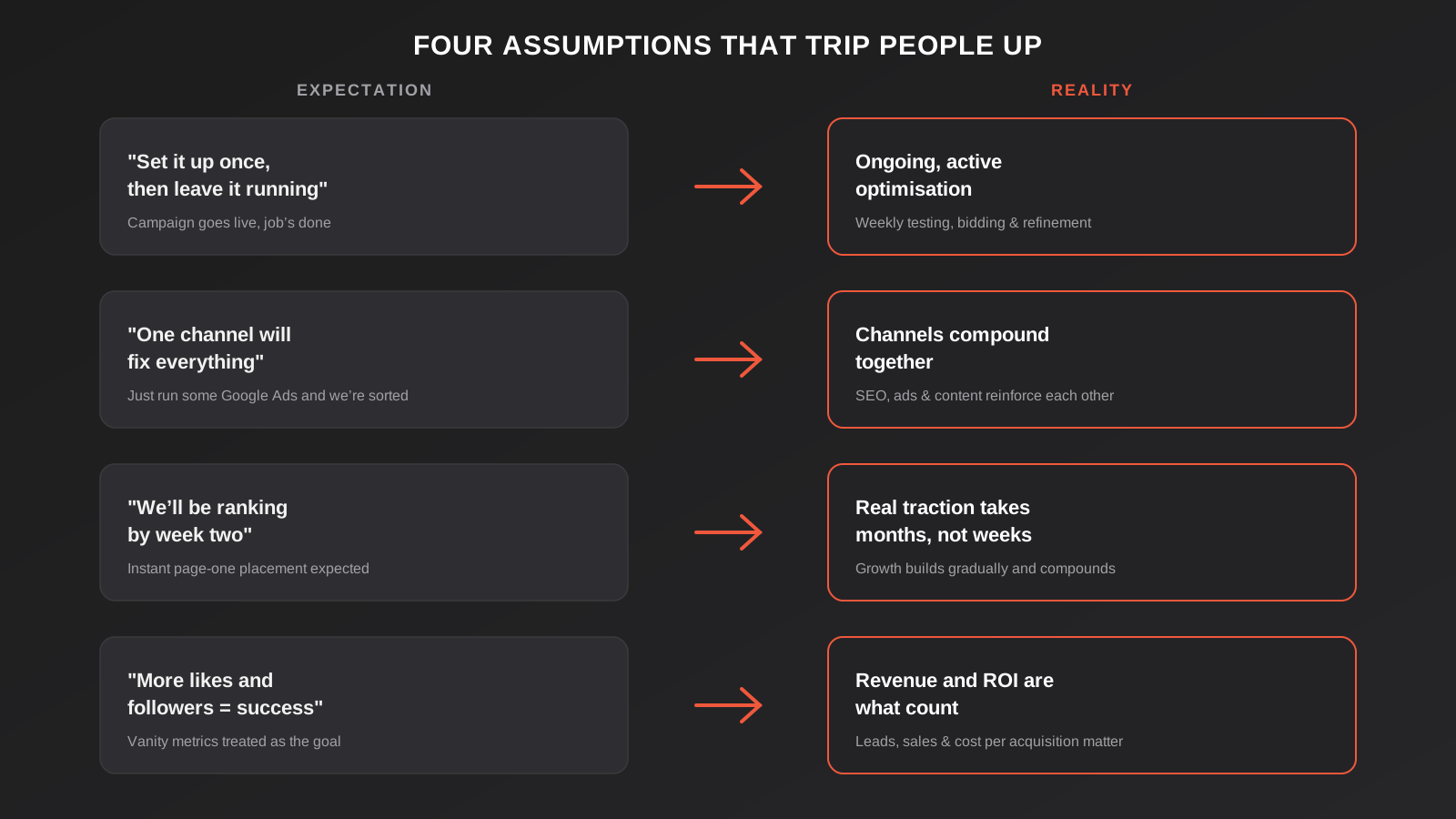
SEO operates on an entirely different clock, and it’s the channel most commonly oversold on speed. Search engines need to crawl new or changed pages, assess them against thousands of ranking signals, and — critically — watch how the page performs over time before deciding it deserves a place on page one. Even a technically excellent SEO campaign typically shows early movement (impressions climbing, rankings appearing on pages two and three) around month three or four, with genuinely meaningful traffic and lead volume from month six onward, and the strongest compounding gains after month twelve.
This is one of the most consistent findings across the work we do, and it’s covered in more depth in our complete guide to SEO for Australian businesses — there is no shortcut here that doesn’t also carry serious risk. Techniques that promise faster rankings almost always trade long-term visibility for a short-term bump, and search engines have gotten very good at identifying and penalising exactly that trade.
Misconception 2: “One Channel Will Solve Everything”
The second expectation we run into constantly is the belief that a single channel — usually whichever one a business owner has heard the most about — will be sufficient on its own. “Just get us on page one of Google” or “just run some Facebook ads” are both requests we understand, but they’re built on a misunderstanding of how digital channels actually interact with a buyer’s decision.
Why Channels Compound Rather Than Compete
Very few purchases, even relatively simple ones, happen from a single touchpoint. Someone sees a Meta ad for a business they don’t recognise, doesn’t click, but remembers the name. A week later they search for that service on Google and find the business ranking organically, which adds credibility the ad alone hadn’t earned. They visit the website, don’t convert, and see a retargeting ad three days later that finally prompts the enquiry. In a last-click reporting view, that Google Ads or Meta Ads click looks like the entire story. In reality, three or four separate touchpoints did the actual work of building trust and reducing perceived risk.
This is why we generally recommend a mix of channels even on modest budgets, rather than concentrating everything into one. Paid search captures existing demand. Paid social builds awareness and re-engages people who’ve already shown interest. SEO builds a compounding, increasingly free source of that same existing demand over time. Content and email nurture the people who aren’t ready to buy yet. None of these channels is optional in a mature marketing program — they’re different tools solving different parts of the same problem, and they get measurably more efficient when they’re working together than when any one of them is working alone.
The practical implication for budget-conscious businesses isn’t “you need six channels from day one.” It’s that a single channel run in isolation will almost always underperform the same budget split more deliberately, because it’s trying to do a job that naturally spans the whole customer journey by itself.
Misconception 3: “Once It’s Set Up, We Can Leave It Alone”
The “set and forget” expectation is one of the more damaging ones, because it doesn’t just create disappointment — it actively causes campaigns to decay. Digital marketing is not a project with a finish line in the way a website build or a rebrand is. It’s an ongoing operating function, closer to sales or customer service than to a one-off deliverable.
What Ongoing Optimisation Actually Involves
In practice, “ongoing” means a fairly specific set of recurring tasks. Ad accounts need bid and budget adjustments as auction dynamics shift week to week, new ad creative to fight fatigue as audiences see the same ad too many times, and audience refinement as new conversion data comes in. SEO needs new content addressing new search queries, technical fixes as sites change and search engines update their algorithms, and a constant, unglamorous stream of internal linking, page speed, and structured data maintenance. Even email and content marketing decay without fresh input — an automation sequence written in 2024 is talking about a 2024 version of the business.
There’s also a category of work that only becomes visible with time: the algorithm updates that change what “good” looks like, the competitors who launch new campaigns that change auction pricing, and the seasonal shifts in what an audience is searching for or responding to. A campaign that isn’t actively monitored doesn’t stay flat — it drifts, usually downward, because the market around it keeps moving even when the campaign doesn’t.
This is really the crux of what a marketing retainer is paying for. It’s rarely the initial setup, which for most channels takes days or weeks. It’s the recurring attention that keeps a campaign performing as well in month nine as it did in month one — and improving on that, rather than sliding backward.
What an Agency Actually Does, Week to Week
A lot of the expectation gap comes down to a simple visibility problem: clients see the strategy document and the monthly report, but not much of what happens in between. It’s worth being specific about what that middle actually looks like, because it’s rarely the passive “campaign running in the background” that a set-and-forget mindset implies.
On the paid media side, a typical week involves reviewing search term reports to add negative keywords and cut wasted spend, testing new ad copy or creative variations against the current best performer, adjusting bids or budgets in response to performance shifts, and checking landing pages are still converting as well as they were. On the SEO side, it involves briefing and reviewing content, monitoring rankings and organic traffic for early warning signs, fixing technical issues flagged by crawlers, building or earning links, and adjusting strategy as search results for target keywords change — because they do change, sometimes weekly.
There’s also a layer of work that’s entirely about translation: taking raw platform data and turning it into something a business owner can actually use to make decisions, which is different from simply forwarding a dashboard. And there’s troubleshooting — tracking breaking after a website update, a payment gateway change causing conversion data to under-report, a Google algorithm update causing an unexplained ranking shift. None of this is glamorous, and very little of it is visible unless someone points it out, which is exactly why the “what do we actually pay for” question comes up so often.
The Ramp-Up Period Nobody Mentions
There’s also a genuine ramp-up cost at the start of any new engagement that rarely gets talked about upfront. A new agency, however experienced, doesn’t arrive already knowing your product nuances, your best customers, your seasonal patterns or which objections actually kill a sale in your industry. The first month typically involves account audits, tracking verification, competitor research and getting familiar enough with the business to write ad copy or content that sounds credible rather than generic. That ramp-up isn’t wasted time, but it is real time, and it’s part of why judging an agency relationship purely on month-one output tends to be unfair to both sides.
Vanity Metrics vs the Metrics That Actually Matter
One of the more subtle expectation problems isn’t about timelines at all — it’s about which numbers get treated as success. Likes, followers, impressions, click-through rate and website sessions are all easy to report, easy to grow, and largely disconnected from whether a business is actually making more money. We call these vanity metrics not because they’re meaningless, but because they’re frequently mistaken for the goal instead of being treated as one input toward it.
A campaign can generate ten thousand impressions and feel impressive in a report while producing zero qualified leads, and a campaign can generate a fraction of that reach while producing a steady stream of paying customers. The metrics that actually reflect business impact are further down the funnel: cost per lead, lead-to-customer conversion rate, customer acquisition cost, and ultimately return on ad spend or marketing-attributed revenue. We’ve written previously about how to actually calculate this properly in our guide to measuring real Google Ads ROI, because “it generated a lot of clicks” and “it generated profitable customers” are two very different claims that get conflated constantly.
The practical fix is agreeing on the metrics that matter before a campaign launches, not after the first report lands. If lead quality matters more than lead volume, that needs to be tracked and reported on directly, rather than inferred from a rising number of form fills that turn out to be mostly unqualified. Businesses that go in expecting to be shown vanity metrics tend to accept them; businesses that ask for cost per qualified lead and conversion rate from day one tend to get a much more useful, if less flattering, picture — and a much better set of decisions as a result.
What Digital Marketing Actually Costs
Budget expectations are where the gap between hope and reality shows up most bluntly. Business owners frequently arrive with a figure in mind that was set by what felt affordable rather than by what’s competitive in their market, and the two numbers are often quite far apart.
Why “Competitive” Is the Right Benchmark, Not “Affordable”
Digital advertising runs on an auction. Your Google Ads and Meta Ads budgets aren’t spent in isolation — they’re spent bidding against every other business targeting the same customer, in the same industry, in the same city. If a competitor is spending three times your monthly budget on the same keywords, your ads will show less often, in worse positions, to a smaller share of the available audience, regardless of how well-written your ad copy is. Budget isn’t the only lever, but it’s a real constraint, and no amount of clever targeting fully compensates for being meaningfully outspent in a competitive category.
SEO has a different cost structure — there’s no daily auction — but it isn’t cheap either, because it’s genuinely labour-intensive. Quality content, technical audits, link building and ongoing strategy all take real hours from people with real expertise, and cutting that budget tends to show up as slower results rather than as cheaper results at the same speed.
It’s also worth separating two numbers that get conflated constantly: ad spend and management fee. The money paid directly to Google or Meta for the ads themselves is separate from what an agency charges to plan, build, test and optimise the campaigns running on that spend. A business budgeting $2,000 a month total and expecting both a competitive ad spend and full-service management out of that figure is usually working with an unrealistic split — either the ad spend is too thin to compete, or the management is too thin to actually optimise anything. Understanding that split upfront avoids a lot of the “why isn’t this working” conversations that come later.
What a Realistic Range Looks Like
Exact numbers vary a lot by industry, competitiveness and location, which is why we’d rather point you to a proper breakdown than guess at a single figure here — our pricing page sets out realistic ranges by service so you can see what different levels of investment typically buy. As a general shape, though: an SEO program that’s going to move the needle for a genuinely competitive industry usually needs a meaningfully larger monthly investment than a “best effort” retainer, because content production and technical work scale with effort, not with hope. Paid media budgets need to be large enough to exit the learning phase within a reasonable number of weeks — a daily budget so small that it takes months to gather enough conversion data to optimise against will underperform a larger, better-managed budget every time, even before agency fees are counted.
The honest framing we try to give clients is this: figure out what a new customer is actually worth to your business, including repeat purchases, and work backward from there to a budget that makes sense — rather than starting from what feels comfortable to spend and hoping the results scale to match.
A Realistic Timeline: What to Expect Channel by Channel
Pulling all of the above together, here’s roughly what a realistic timeline looks like across the main channels, assuming a reasonably competitive Australian market and a budget matched to that competitiveness.
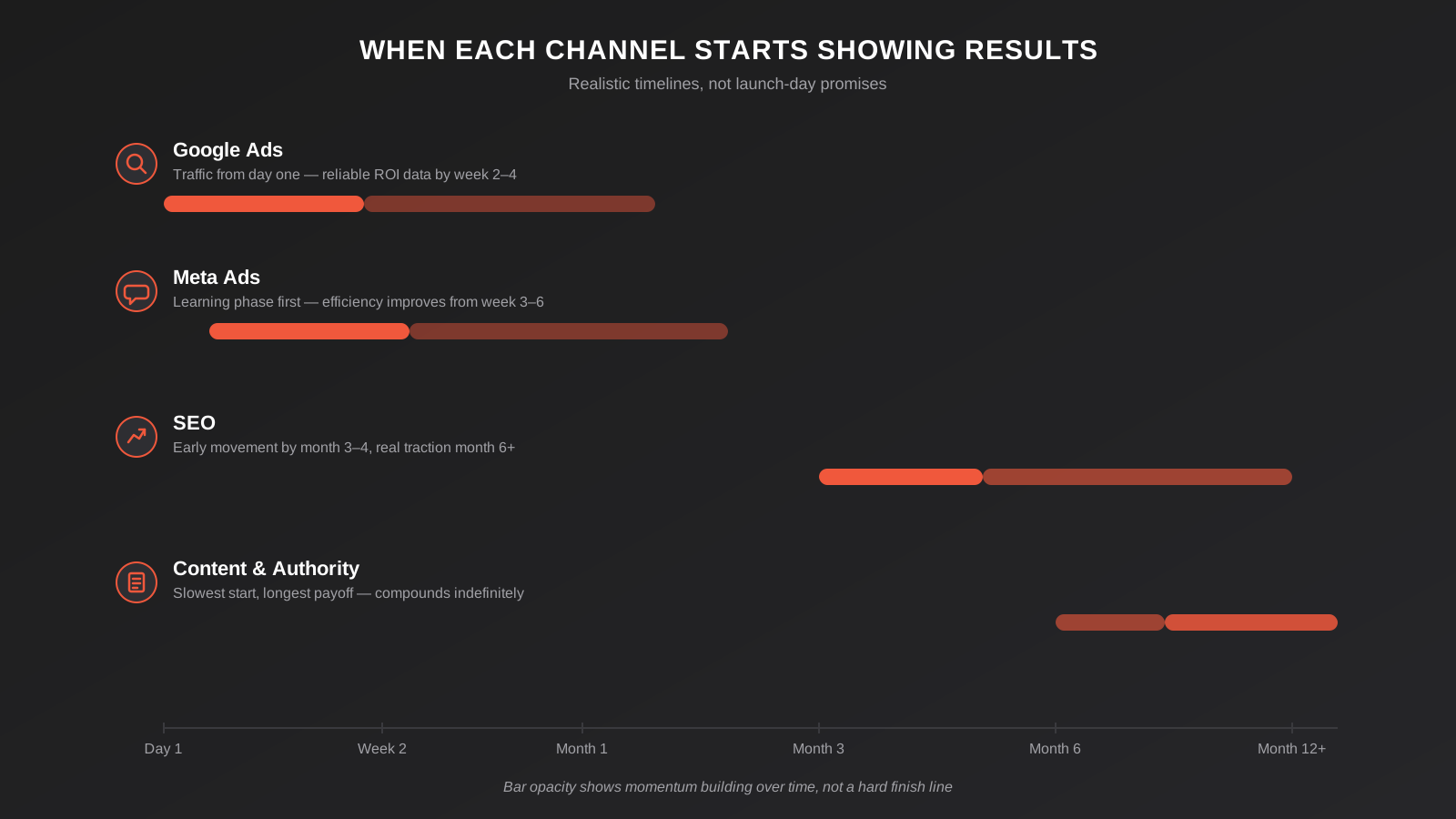
Google Ads produces traffic from the day a campaign goes live, with genuinely reliable, optimised performance data usually available from around week two to four, once the learning phase settles. Meta Ads follows a similar shape but generally needs a slightly longer runway — often three to six weeks — before cost per result stabilises, because it’s building interest rather than capturing existing intent. SEO shows its first green shoots — new impressions, early rankings on pages two and three — around month three or four for most competitive terms, with real, revenue-relevant traffic typically arriving from month six onward and the strongest gains still building well past month twelve. Content and authority building sit behind even SEO on this timeline; a genuinely authoritative content library, and the trust and rankings that come with it, is closer to a twelve-to-eighteen-month build, and it keeps compounding well beyond that if it’s maintained.
None of this is a reason to delay starting. If anything, it’s the opposite — because SEO and content compound slowly, the businesses with the strongest organic presence today are usually the ones who started eighteen months before their competitors, not the ones who found a faster shortcut.
Common Mistakes We See Businesses Make
- Judging a campaign’s success from the first two to four weeks, before the learning phase has finished and before any channel has had time to build momentum.
- Cutting budget the moment results dip slightly, which usually resets the learning phase and makes the dip worse rather than better.
- Running one channel in isolation and expecting it to carry the entire customer journey by itself.
- Treating the initial setup fee or first month as the whole job, rather than the starting point for ongoing, active management.
- Focusing reporting conversations on impressions, reach or followers instead of cost per lead, conversion rate and actual revenue.
- Setting a marketing budget based on what feels affordable rather than what’s competitive for the industry and location.
- Expecting an agency to have zero learning curve on a brand-new account, product or market — the first month of any new engagement includes real ramp-up time.
- Changing strategy, messaging or targeting too frequently, which prevents any single approach from running long enough to generate meaningful data.
Frequently Asked Questions
How long before digital marketing actually pays for itself?
It depends heavily on the channel and the competitiveness of your industry. Paid advertising can become profitable within one to three months once the learning phase is complete and campaigns are optimised, assuming the budget is sufficient to gather enough data quickly. SEO is a longer game — most businesses see meaningful, revenue-relevant traffic from month six onward, with the strongest returns compounding well past the twelve-month mark. A blended strategy using both tends to produce earlier wins from paid channels while SEO builds in the background.
Why did our Google Ads or Meta Ads results get worse before they got better?
This is usually the learning phase, and it’s normal rather than a sign of a badly built campaign. When a new campaign launches, or an existing one is changed significantly, the ad platform’s algorithm needs fresh conversion data before it can optimise delivery efficiently. During that window, cost per result is often higher and less consistent. Once enough conversion events have accumulated — typically a few weeks, depending on budget — performance usually stabilises and improves.
Do we really need more than one marketing channel?
In almost every case, yes. Very few purchases happen from a single touchpoint — most customers see an ad, search for the business later, read a couple of reviews or blog posts, and convert after several separate interactions. Channels like SEO, Google Ads, Meta Ads and email marketing tend to reinforce each other rather than compete, and a budget split across a well-chosen mix generally outperforms the same total spend concentrated into one channel alone.
What does an agency actually do once a campaign is live?
Ongoing, active management: adjusting bids and budgets as auction dynamics shift, testing new ad creative and copy, refining audiences and keyword targeting, briefing and publishing SEO content, fixing technical issues, monitoring rankings and conversion tracking, and reporting on results in a way that’s actually usable for business decisions. The setup phase is usually the smallest part of the total work — most of the value is in the ongoing optimisation that follows.
How much should a small or medium business budget for digital marketing?
It depends on your industry’s competitiveness, your location, and what a new customer is actually worth to your business. Rather than starting from what feels comfortable to spend, it’s worth working backward from customer lifetime value to a budget that can realistically compete in the auction and produce enough data for optimisation. Our pricing pages set out realistic ranges by service so you can benchmark against what’s actually needed rather than guessing.
What metrics should we actually be looking at each month?
Beyond the top-of-funnel numbers like impressions and clicks, focus on cost per lead, lead-to-customer conversion rate, customer acquisition cost, and return on ad spend or marketing-attributed revenue. These metrics connect marketing activity directly to business outcomes, whereas metrics like reach, followers and click-through rate can look impressive without reflecting any actual change in revenue.
Should we pause a campaign that isn’t performing yet?
Usually not immediately, unless it’s clearly and fundamentally broken — wrong targeting, broken tracking, or an offer that isn’t landing at all. Pausing and restarting a paid campaign resets the learning phase, meaning the algorithm has to relearn from scratch and performance dips again before it can improve. For SEO, pausing work part-way through a technical fix or content push often means losing the early progress made and having to rebuild momentum later. It’s usually more effective to diagnose what specifically isn’t working and adjust that element, rather than stopping the whole campaign and starting over.
Where to Start
If there’s one thing worth taking from all of this, it’s that a realistic timeline isn’t a lowered bar — it’s the version of the plan that actually works. Businesses that understand the learning phase, budget competitively, commit to more than one channel, and stay the course past the slow early months are consistently the ones who end up with digital marketing as a genuine, compounding source of revenue rather than an expense they cut after one disappointing quarter.
If you’re weighing up where to start, or trying to work out whether your current results are actually on track given how long you’ve been running, we’re happy to have that conversation honestly — including telling you if a channel isn’t the right fit yet, or if your budget needs adjusting before it can realistically compete. You can see how we approach SEO specifically on our SEO services page, or get in touch to talk through what a realistic plan looks like for your business.
Keep reading
Related posts
Digital Marketing for Car Dealerships and Workshops in Australia (2026)
Digital marketing for Australian car dealerships and workshops: local SEO, Google Ads, booking flows, and the price-advertising rule every dealer must follow.
Digital Marketing for Australian Manufacturers: Turning Visitors Into RFQs (2026)
How Australian manufacturers turn website visits into RFQs: capability pages, product SEO, LinkedIn Ads for procurement buyers, and quote automation.
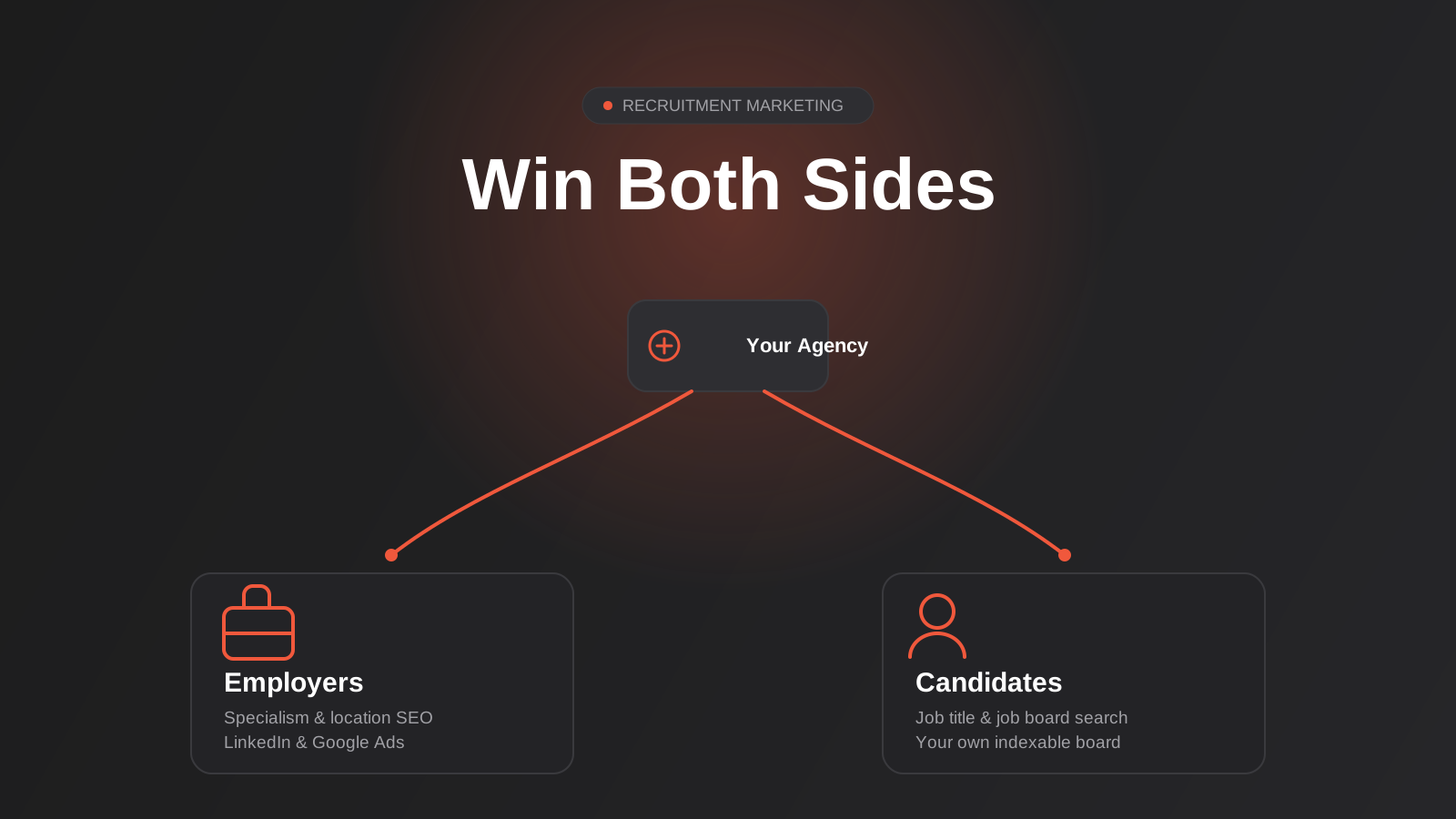
Marketing for Recruitment Agencies in Australia: Winning Both Clients and Candidates
Recruitment agencies sell to two audiences at once. How SEO, LinkedIn Ads, job board strategy and compliance need to split between employers…
Got a project you'd like to talk through?
Tell us what you're working on — we'll come back with a plan.
