
How to Choose a Web Design Agency in Australia (2026 Guide)
 Jignesh Vagadiya
01/09/2026
21 min read
Jignesh Vagadiya
01/09/2026
21 min read
Most businesses don’t choose a web design agency. They choose whoever answered the phone fastest, whoever quoted the lowest number, or whoever a mate used two years ago and can’t quite remember if it went well. We say this as an agency that designs websites for a living: the actual selection process most people go through is closer to a coin flip than a decision, and it shows up later in the form of a site that never quite gets finished, a designer who’s stopped answering emails, or a homepage that looks fine in isolation but does nothing for the business behind it.
This isn’t a guide to design trends or colour theory. It’s a narrower question: how do you actually work out which agency, freelancer or developer is right for your project, before you’ve handed over a deposit and six weeks of your attention? We’ve been on the receiving end of a lot of “can you fix what the last person built” conversations, and almost every one of them traces back to a decision made too quickly, on too little information, at the very start.
If you’ve already read our guide to choosing an SEO agency, some of the underlying logic here will feel familiar — vet the process, not just the pitch. But web design is a different kind of purchase. You’re not buying an ongoing channel with monthly reporting; you’re commissioning a single asset that your business will lean on for years, built by someone whose taste and technical judgement you can’t fully evaluate until it’s too late to change course cheaply. That’s worth taking seriously.
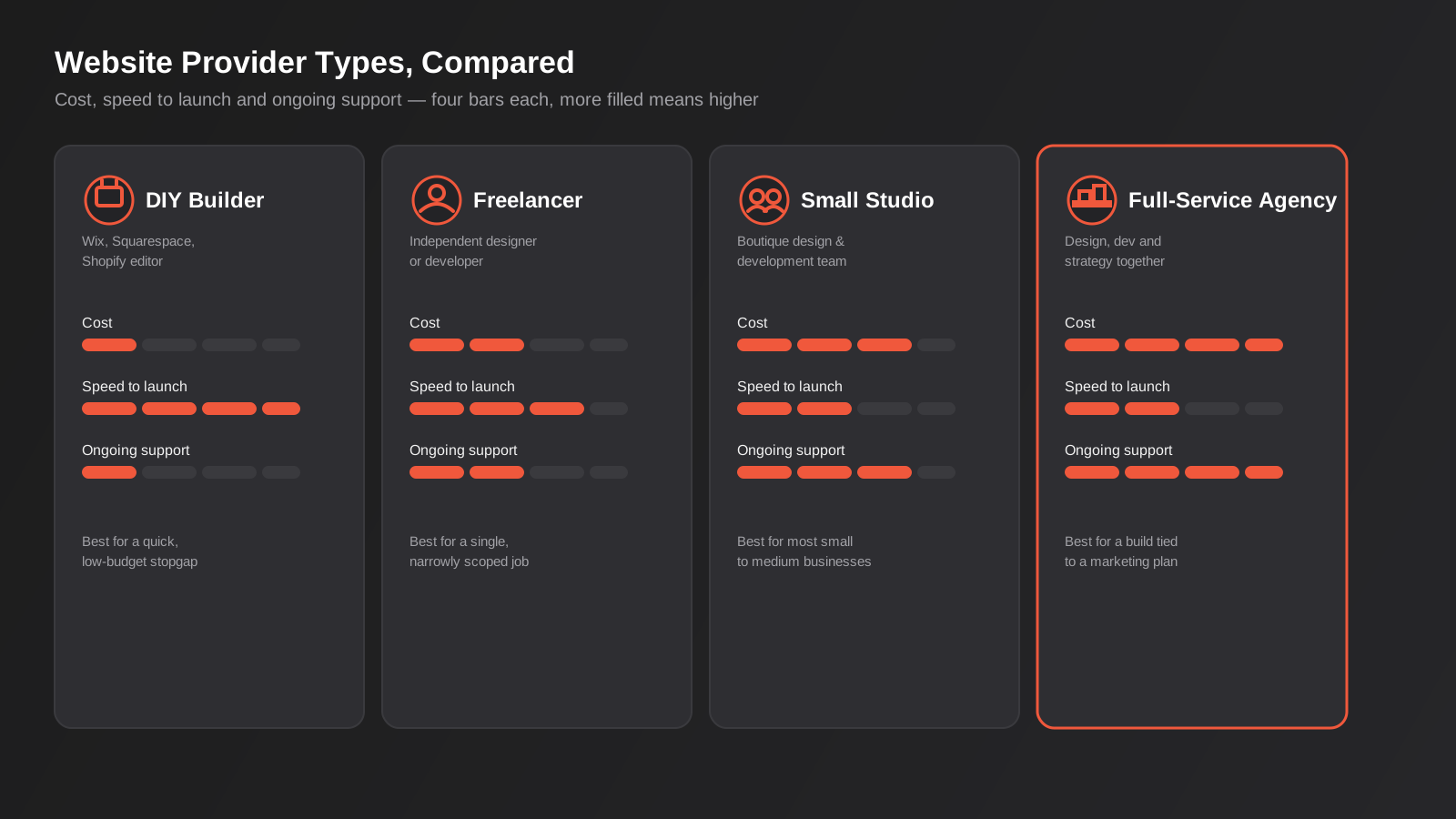
Web Design Agency, Developer, Freelancer or DIY Builder — What Actually Fits Your Project
Before you shortlist anyone, it’s worth being honest about which category of provider your project even needs. A lot of frustration in this space comes from a mismatch between the scale of the job and the type of help hired to do it — a five-page brochure site doesn’t need an agency retainer, and a multi-stakeholder rebuild with a content migration and integrations shouldn’t be handed to a solo freelancer juggling four other clients.
DIY builders (Wix, Squarespace, Shopify’s own editor)
These make sense when the budget genuinely doesn’t stretch to a custom build yet, or when you need something live this week rather than this quarter. The trade-off is real: you’re working inside someone else’s template logic, your options for custom functionality are capped, and migrating off the platform later — onto WordPress or something fully custom — usually means rebuilding from scratch rather than porting the work forward. Fine as a stopgap. Rarely the right long-term home for a business that’s actually trying to grow.
Freelancers
A good freelance designer or developer can be excellent value for a narrowly scoped job — a single landing page, a redesign of one underperforming section, a quick technical fix. What you’re trading away is redundancy. If they get sick, get busy with a bigger client, or simply move on to something else, your project stalls with no backup. Freelancers also tend to specialise in either design or development, not both, so a full build often means coordinating two separate freelancers yourself and being the one who catches it when their work doesn’t line up.
Small studios and boutique agencies
This is where a lot of small-to-medium Australian businesses land, and for good reason. You get design and development under fewer roofs than a freelancer pairing, project management that isn’t entirely on you, and enough scale that one person being unavailable doesn’t stop the project. The variance here is wide though — a boutique studio can mean three genuinely skilled specialists, or it can mean one person subcontracting the actual work offshore with no visibility into who’s doing it. The vetting steps later in this guide matter more here than anywhere else, because the studio’s polish doesn’t always match what’s actually delivered.
Full-service agencies
The advantage of a full-service agency isn’t just design and development in one place — it’s that the site gets built with an understanding of what happens to it afterwards. A homepage designed without any thought for how it’ll rank, or a form built without any thought for how leads get followed up, is a common failure point when design happens in isolation from marketing. The trade-off is usually price: a full-service build costs more than a narrowly scoped freelance job, because you’re paying for coordination and strategy alongside the visible design work.
What “Website Design” Actually Includes (And Where Agencies Cut Corners)
“Website design” gets used as a catch-all term, which makes it easy for a provider to quote a low number by quietly excluding half of what the term should cover. Knowing what’s actually involved lets you spot a scope that’s been trimmed before you’ve even asked for a discount.
Discovery and structure, before anything visual
Proper design work starts with understanding what the site needs to do and for whom, then mapping the structure and content hierarchy before a single layout gets drawn. Skip this step and you get a site that looks considered on the surface but makes visitors hunt for the thing they actually came to do. If a provider jumps straight to “send us your logo and colours and we’ll have mockups by Friday,” that’s a sign the thinking part of the process has been skipped, not accelerated.
Visual design across every template, not just the homepage
Homepages get all the attention in a pitch because they’re the most visually impressive page to show off. But most of a visitor’s actual experience happens on service pages, product pages and contact forms — pages that are cheaper to design and easier to skimp on. Ask specifically how many unique page templates are included in the quote, not just “the whole site,” because “the whole site” can quietly mean one homepage design stretched across every other page with minor tweaks.
Responsive design, tested on real devices
Most Australian traffic to a small business site arrives on a phone. A design that was built for desktop and then “made responsive” as an afterthought usually shows it — cramped tap targets, text that’s too small, images that crop awkwardly. Mobile-first design, where the phone layout is the starting point rather than the compromise, produces a noticeably different (and better) result. Ask whether the provider designs mobile-first and tests on actual devices, not just a browser’s resize tool.
A content-ready handoff to development
Design that isn’t built with the CMS in mind creates real problems later — a beautiful mockup that turns out to need a developer for every content update isn’t design, it’s a liability your team inherits. A good handoff includes reusable components, a style guide, and layouts your own team can actually edit once the site is live, whether that’s you or a developer picking up the build.
How to Evaluate a Portfolio Without Getting Dazzled
A portfolio is the easiest part of an agency’s pitch to fake well and the hardest part for most buyers to actually assess. Everyone’s portfolio looks good in a curated gallery of static screenshots. The questions that matter go beyond “does this look nice.”
Click through to the live sites, not just the screenshots
A surprising number of portfolio pieces link to sites that no longer exist, were never actually launched, or have visibly regressed since the screenshot was taken — broken layouts, outdated content, a client who’s clearly moved to a different provider. Open every example in the portfolio you’re seriously considering and check it still works, loads reasonably fast, and looks like something that’s actively maintained.
Ask what the brief was, not just what got delivered
A striking design might be exactly what a client asked for, or it might be the designer’s personal aesthetic applied regardless of the brief. Ask “what was this client trying to achieve, and how did the design serve that?” A confident answer that connects specific design choices back to a business goal is a very different signal to a shrug and “we just made it look premium.”
Check whether the portfolio matches your scale and industry
A studio whose entire portfolio is polished hospitality and fashion brands may not be the right fit for a B2B services business that needs to build credibility fast and generate enquiries, not win a design award. It doesn’t mean they can’t do the work — it means you should ask directly whether they’ve built anything with a similar goal, rather than assuming visual range in one direction transfers to a completely different one.
Look past the design at the fundamentals
Run a couple of their live portfolio examples through a free tool like Google PageSpeed Insights, and check they load properly on your own phone. A design portfolio full of beautiful sites that load slowly tells you something the screenshots won’t — that the studio’s process treats performance as someone else’s problem, which matters a great deal if development is being handled by the same team or handed off separately.
Weight recent work more than old work
A portfolio piece from four years ago tells you what a provider could do then, on a platform and with tools that may have changed considerably since. Ask what’s been delivered in the last six to twelve months specifically. A studio that’s still leading with its best work from several years back, with nothing recent to show alongside it, is worth a direct question about why.
Questions to Ask Before You Sign
Bring a short list to every discovery call and pay as much attention to how comfortably each question gets answered as to the answer itself. Hesitation and deflection tell you more than most sales pitches do.
- Who specifically will design and build the site — the person on this call, or a team we haven’t met yet?
- How many unique page templates are included, and what happens if we need more once we see the site structure?
- Will the design be mobile-first, and can we see it tested on real devices before development starts?
- Who owns the final files, the CMS account and the hosting once the project is complete?
- What’s the process if we want changes after the design is approved but before development is finished?
- How many rounds of revisions are included, and what happens beyond that number?
- What does the handoff to development look like, and is that the same team or a separate one?
- What happens to the timeline if we’re slow to provide content, images or feedback?
- Is there support after launch, or does the relationship end the day the site goes live?
- Can we speak to a recent client directly, not just read a testimonial on your site?
That last one is worth pushing on. A fifteen-minute call with a genuine client — ideally one whose project finished more than a few months ago, so you’re hearing about the site after the honeymoon period — tells you more about how an agency actually operates under pressure than any case study can. You can also cross-check a shortlisted agency against its own public reviews before you even get on a call, which is a faster first filter than waiting for a reference to be arranged.
What Web Design Actually Costs in Australia
Pricing in this industry is genuinely inconsistent, which makes comparing quotes harder than it should be. As a rough shape of the market: an offshore freelancer might quote a few hundred dollars for a basic build, a local freelancer typically sits somewhere in the low thousands, a small studio doing a proper custom job tends to land in the mid single thousands to high single thousands, and a larger creative agency project can run well into five figures once brand strategy and more complex functionality are involved. None of those numbers are wrong on their own — they reflect genuinely different scopes of work, not just different levels of quality.
What matters more than the headline number is what’s actually included in it. We price our own website design and website development work as fixed-cost, one-time projects with full ownership handed over at the end — no ongoing licence fee back to us, no recurring charge just to keep the site running under our name. Every package on our pricing page is listed in full before you ever get on a call, precisely because “it depends” is a frustrating answer to a question every business asks first.
Why the lowest quote is rarely the cheapest option
A quote that’s dramatically below every other one you’ve received is telling you something about the scope, not just the price. It usually means fewer unique templates, no discovery phase, minimal revisions, or a build on a shared theme rather than anything custom. That’s not automatically a bad deal — if the scope genuinely matches what you need, a lean build at a lean price is a sensible choice. The problem is when the low number gets compared against a properly scoped quote as if they’re the same product, and the business only discovers the gap once the “cheap” site needs a rebuild eighteen months later.
Fixed price versus hourly
Fixed-price quotes protect you from scope creep turning into an open-ended bill, provided the scope was actually defined properly upfront. Hourly billing can work well for smaller, well-defined jobs where the client trusts the provider’s estimate, but it puts the risk of a project running long back on you. Either model can be fair — what matters is that the number of pages, revision rounds and inclusions are written down, not left as a verbal understanding from the sales call.
The costs that come after the build
The headline design and development fee is rarely the last cost. Hosting, a domain, an SSL certificate and some form of ongoing maintenance are all part of running a website, whether you pay for them bundled through your provider or manage them separately yourself. Ask upfront what’s included versus what becomes a separate, recurring line item once the project wraps — a quote that looks cheaper on the design line can end up more expensive over two years once hosting and support are added on top at a premium. It’s a reasonable question to ask any provider directly: what does this site cost to actually keep running, not just to build?
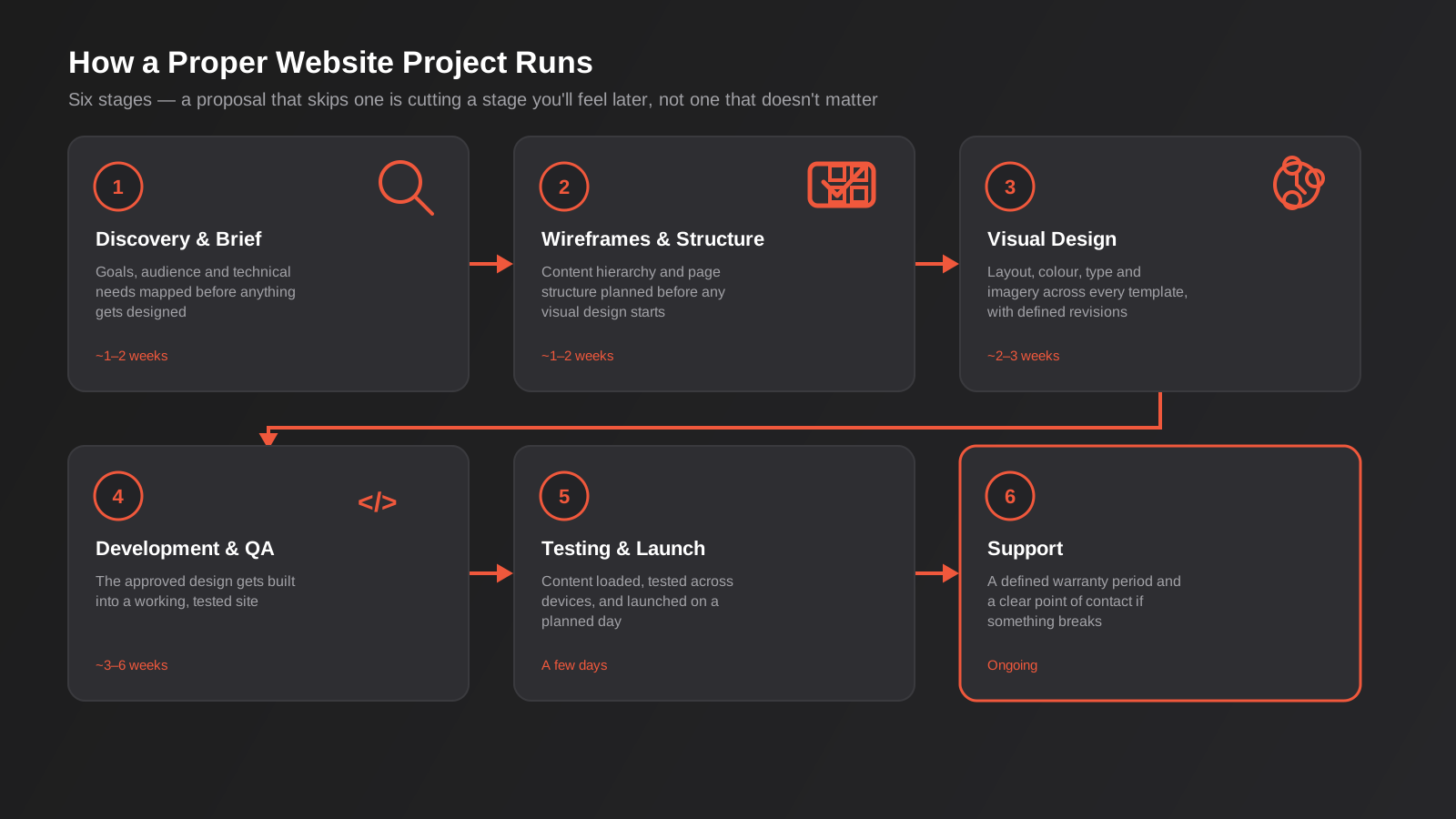
How a Proper Website Project Actually Runs, Start to Finish
Timelines are one of the easiest things to get wrong when comparing proposals, because “eight weeks” from one provider and “eight weeks” from another can mean genuinely different processes. Knowing what should happen in each phase lets you spot a proposal that’s compressed the parts that matter most.
Discovery and brief (usually a week or two)
This is where goals, audience and technical requirements get properly understood before anyone opens a design tool. A rushed discovery phase — a single thirty-minute call and straight into wireframes — is one of the more reliable early signs that the rest of the project will be reactive rather than considered.
Wireframes and structure (a week or two)
Content hierarchy and page structure get mapped before any visual design starts, so the site solves the right problem before it looks like anything. Some providers skip this and go straight to full visual mockups, which can feel faster but usually means structural problems get baked in and discovered much later, when they’re far more expensive to fix.
Visual design and revisions (two to three weeks)
Layout, colour, type and imagery come together across every template, with a defined number of revision rounds built in. This is the phase most quotes describe in detail because it’s the most visible, but it’s also where scope quietly narrows if “the whole site” turns out to mean fewer unique page designs than you assumed.
Development and QA (three to six weeks, depending on scope)
The approved design gets built into a working, tested site — the phase where a lot of the real engineering happens, largely invisible to the client until it’s demonstrated. This is where development quality either shows up as a fast, stable site or doesn’t, and it’s genuinely hard to assess from the outside until the site is live and under real traffic.
Content, testing and launch
Content gets loaded, everything gets tested across devices and browsers, and the site goes live — ideally on a calm, planned day rather than a rushed one because a deadline slipped earlier in the process. If a provider’s timeline has no visible buffer between “development finished” and “launch,” ask where the testing actually happens.
Support after handoff
A proper process doesn’t just stop the day the site goes live. Whether that’s a defined warranty period, an ongoing care and support arrangement, or simply a clear point of contact if something breaks in the first month, this phase is often the one left out of a proposal entirely, because it’s the part that doesn’t help win the pitch.
Contract Terms That Actually Protect You
This is the section most people skim past, and it’s where a project that looked fine on the surface can quietly go wrong.
Ownership of the final files
Confirm in writing that you own the design files, the code and the content once the project is paid for and complete, not just a licence to use them while you keep paying. Some providers build sites on their own hosting under their own accounts, which creates leverage that has nothing to do with the quality of the work — you’re effectively locked in because moving means starting over.
A defined revision process
“Revisions included” means very little without a number attached. Get the number of design revision rounds written into the agreement, along with what happens if you need more — an hourly rate, a fixed add-on fee, whatever it is, as long as it’s decided before you’re in the middle of round four wondering if you’re about to be billed extra.
What happens if the timeline slips
Timelines slip in both directions — sometimes the agency is late, sometimes the client is slow supplying content or feedback. A fair contract addresses both: what recourse you have if the agency misses agreed milestones, and how the agency handles a project that’s stalled because you haven’t sent through what they need. Neither party benefits from a contract that’s silent on this until it’s already a problem.
Post-launch support, spelled out
Launch day is not the finish line, even though a lot of contracts are structured as if it is. Clarify whether there’s a warranty period for bug fixes after launch, what ongoing support costs if you want it, and who’s responsible if something breaks a month in — a plugin conflict, a hosting issue, a broken form. If none of that is written down, assume the relationship ends the moment the invoice is paid.
Common Mistakes Businesses Make When Choosing a Web Design Agency
- Choosing on price alone, without comparing scope. A quote that’s half the price of every other one usually reflects half the work, not twice the value.
- Skipping the live portfolio check. Screenshots don’t show load speed, mobile behaviour or whether the site is still actually live.
- Not confirming who does the actual work. The senior designer on the sales call isn’t always the person who ends up building your site.
- Treating the brief as optional. A vague brief produces a design the agency likes, not necessarily one that serves your customers.
- No content plan before design starts. Designing around placeholder text almost always means a rushed, awkward retrofit once real copy arrives.
- Ignoring what happens after launch. A site with no ongoing support plan tends to quietly rot — unpatched, outdated, slowly less secure — within a year or two.
- Assuming design and development will just line up. When two separate providers handle each half, someone needs to own making sure the handoff actually works, and it’s rarely spelled out who.
- Signing before checking ownership terms. Discovering you don’t actually own your own site is a bad time to find that out.
- Forgetting to budget for what comes after launch. Hosting, maintenance and small updates don’t stop being a cost just because the invoice for the build has been paid.
Frequently Asked Questions
How long does it take to find and hire a web design agency in Australia?
Budget two to four weeks for a proper process — shortlisting three or four providers, getting on discovery calls, comparing proposals and checking references. Rushing this stage to save a couple of weeks is a common source of the regret that shows up months later, once the build is already underway.
Should I hire a separate designer and developer, or one provider for both?
For a straightforward business site, one provider handling both under a single process usually produces a cleaner result, because nothing gets lost in the handoff between two teams that have never worked together before. Separate providers can work well for larger or more unusual projects where you genuinely want a specific designer’s aesthetic combined with a specific developer’s technical approach, but you’ll need to actively manage that handoff yourself.
Do I need a logo and brand identity before I start a website project?
Not necessarily. If you already have a logo, colours and type, a good designer works around them. If you don’t, most agencies can build a lightweight identity as part of the website project itself, or you can commission a proper branding project first if the business genuinely needs one beyond what a website brief covers.
What’s a reasonable number of design revisions to expect?
Two to three structured rounds is typical for a standard business website — enough to refine direction without turning into an open-ended back-and-forth. What matters more than the exact number is that it’s written into the agreement, along with what happens (and what it costs) if you need more than that.
Can I switch web design agencies partway through a project?
It’s possible but rarely clean, particularly mid-design. Before starting anywhere, confirm what you’d walk away with if you needed to stop — design files, content, any code already written. A provider that’s cagey about this question upfront is one worth being cautious of regardless of how the rest of the pitch goes.
Is a cheaper agency ever the right choice?
Yes, when the scope genuinely matches the price and the business’s needs are simple — a lean site for a business that just needs a credible online presence doesn’t need a five-figure build. The mistake isn’t choosing a cheaper option; it’s choosing one without checking that “cheaper” and “less scope” are actually the same thing, rather than assuming a lower number is just a better deal on identical work.
Do I need a whole new website, or just a redesign of the pages that aren’t working?
Often the latter. A lot of sites are structurally fine but have one or two pages — usually the homepage or a key service page — quietly costing conversions. A good agency will look at real visitor data before recommending a full rebuild over a targeted redesign, and should be willing to scope just the underperforming pages rather than defaulting to the bigger, more expensive option.
Where to Start
Choosing a web design agency doesn’t need to be a guess dressed up as a decision. Work out which category of provider actually matches the size of your project, shortlist a few, ask the same specific questions of each one, check their live work rather than their screenshots, and read the contract before you sign it — particularly the parts covering ownership and what happens after launch.
If you’re at the point of comparing options, or wondering whether a site you’ve already got is worth rebuilding versus improving, we’re happy to have a straightforward conversation about what we’d look at first — no pressure, no generic package pitch, just an honest read on what your project actually needs.
Keep reading
Related posts
Best Website Hosting for Australian Businesses (2026): 6 Options Compared
We compare six hosts Australian businesses actually use in 2026 — real drawbacks, data centre locations and pricing traps included.
Website Redesign Without Losing Rankings or Revenue: A 2026 Guide for Australian Businesses
How to redesign your website without losing SEO rankings or leads: the audit, redirect map, QA and 90-day process Australian businesses need.
Core Web Vitals in 2026: A Practical Guide to LCP, INP & CLS for Australian Websites
A practical guide to Core Web Vitals for Australian businesses: what LCP, INP and CLS measure, how to test them properly, and…
Got a project you'd like to talk through?
Tell us what you're working on — we'll come back with a plan.
