
How to Choose the Right LinkedIn Ads Service for Your Business (2026 Guide)
 Jignesh Vagadiya
19/08/2026
20 min read
Jignesh Vagadiya
19/08/2026
20 min read
LinkedIn Ads gets shopped around differently to every other paid channel, and most businesses don’t realise it until the invoice arrives. A cost-per-click that would be alarming on Google or Meta is completely normal here, the minimum viable audience size is smaller than people expect, and the learning phase is slower. None of that makes LinkedIn Ads a bad channel — for genuine B2B demand generation, recruitment, or reaching a specific seniority level inside a specific industry, nothing else comes close on targeting precision. It does mean choosing who runs your LinkedIn Ads matters more than it does on channels with a wider margin for error.
This guide isn’t a checklist of generic “look for good communication” advice that could apply to hiring any agency for anything. It’s specifically about what makes LinkedIn Ads different from the paid channels most businesses already understand, and what that difference means for picking the right service to run it — from targeting and creative through to how the agency prices its work and reports on results.
Why LinkedIn Ads Plays by Different Rules
The single most important thing to understand before evaluating any LinkedIn Ads service is that the platform is optimised for reaching professionals by firmographic and job-related data — title, seniority, function, company size, industry — not for the cheapest possible click. That precision is genuinely unmatched; no other ad platform lets you target “VP-level or above, in a company between 200–1,000 employees, in the logistics industry, who has changed jobs in the last 90 days” with the same accuracy. But precision comes at a cost: LinkedIn’s average cost-per-click in Australia typically runs several multiples of Google Search or Meta, and campaigns need meaningfully more budget and time before delivery stabilises.
This changes the entire evaluation criteria for a LinkedIn Ads service. An agency that’s excellent at running high-volume, low-CPC Meta campaigns for ecommerce brands doesn’t automatically transfer those skills to a channel where the entire game is about audience precision, message relevance to a narrow professional segment, and patience with a slower, more expensive feedback loop.
Start With the Objective, Because It Decides Everything Downstream
LinkedIn Campaign Manager groups objectives into three categories — Awareness, Consideration, and Conversions — and the objective selected at setup determines which ad formats, bidding options, and optimisation events are even available. A service that jumps straight into “we’ll set up Sponsored Content” without first pinning down whether the goal is brand awareness, lead generation, event registrations, website traffic, or recruitment is skipping the step that everything else depends on.
Lead generation and recruitment campaigns, in particular, need a fundamentally different creative and targeting approach to brand awareness campaigns — a recruitment campaign aimed at passive candidates in a specific skill set behaves nothing like a demand-generation campaign aimed at economic buyers. If the objective conversation with a prospective agency feels rushed or generic, that’s usually a sign the rest of the strategy will be too.
LinkedIn’s Ad Formats, and When Each One Actually Fits
Sponsored Content (single image, carousel, video, document ads)
The native in-feed format and the workhorse of most LinkedIn campaigns. Single image ads suit straightforward offers; carousels work well for multi-step stories or showcasing several products/services in one unit; video performs strongly for thought-leadership and brand-building content where watch time itself is a useful engagement signal; document ads (native PDF/slide uploads that expand in-feed) have become a genuinely underused format for gated-content-style lead generation without sending the visitor off-platform at all.
Conversation Ads and Message Ads
Delivered directly into LinkedIn’s messaging inbox, these formats can feel intrusive when done badly (generic, obviously mass-blasted copy) and genuinely effective when done well (specific, relevant, offering something the recipient’s role would plausibly care about). Conversation Ads, the newer interactive version, let the recipient choose between multiple response paths rather than reading a single static message — useful for routing different personas toward different offers from one campaign.
Text and Dynamic Ads
Lower-cost, lower-prominence formats that sit in the sidebar rather than the feed. They rarely carry a campaign on their own but can be a reasonable low-cost layer for sustained brand presence alongside a primary Sponsored Content campaign, particularly for retargeting.
Lead Gen Forms
LinkedIn’s native lead form, pre-filled with the user’s profile data, removing the friction of typing details on mobile. It reliably improves form completion rates compared with sending traffic to an external landing page — but it also removes the visitor from your own analytics and website entirely, which is a genuine trade-off worth discussing rather than defaulting into.

Targeting: The Real Advantage, and the Trap Hiding Inside It
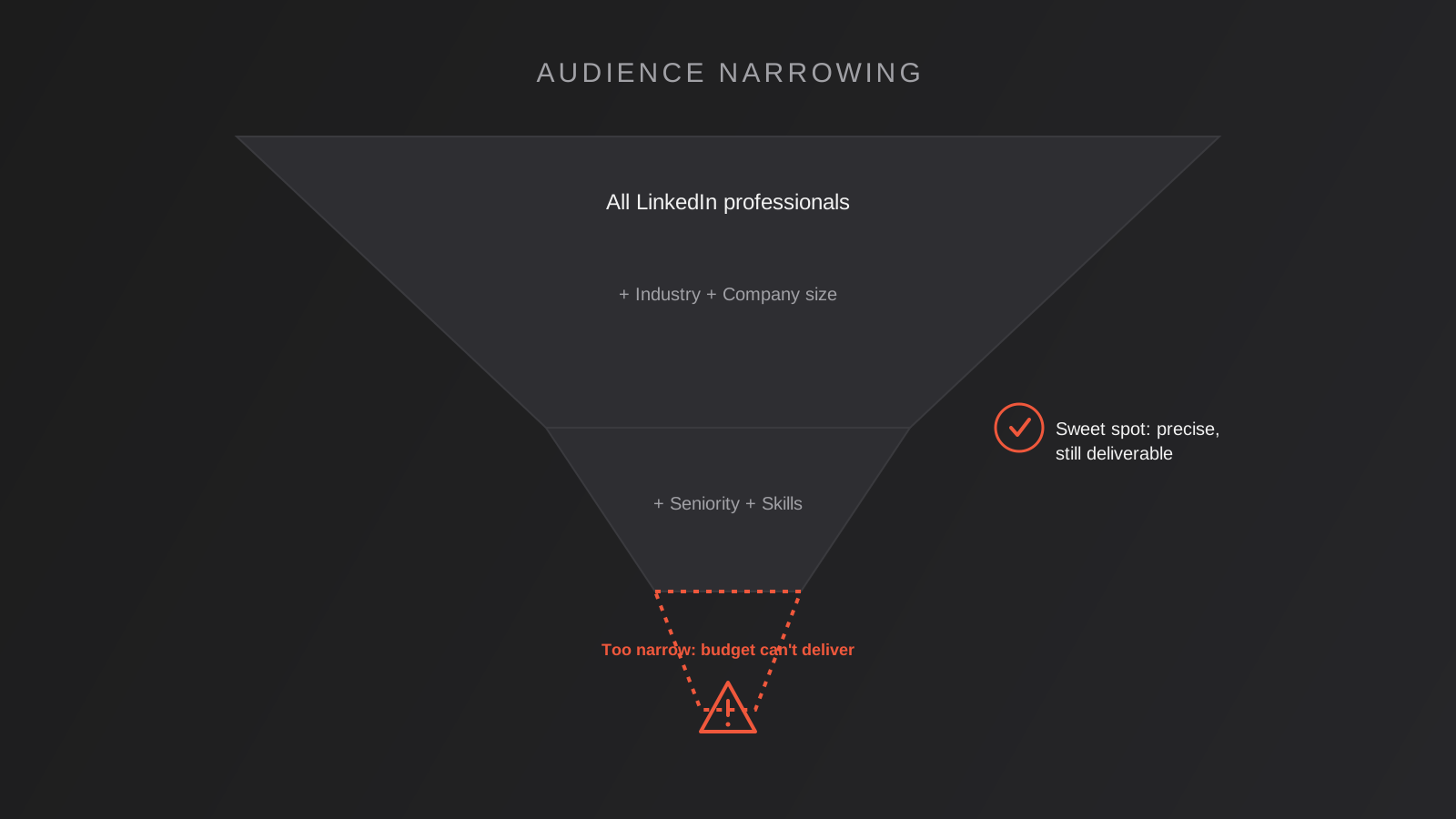
LinkedIn’s targeting depth — job title, seniority, function, company size, industry, skills, groups, and LinkedIn’s own Matched Audiences for retargeting website visitors or uploading a customer/contact list — is the platform’s genuine differentiator. It’s also the most common way a LinkedIn Ads account quietly fails: stacking too many precise filters narrows the addressable audience so far that Campaign Manager can’t deliver the budget at all, or delivers it so slowly the campaign never generates enough data to learn.
A competent LinkedIn Ads service checks projected audience size before launch and builds in enough headroom — broadening one dimension (say, seniority range) if another needs to stay tight (a specific niche industry) — rather than layering every available filter simply because the option exists. This is one of the clearest tells of genuine LinkedIn-specific experience versus someone applying a Meta or Google mental model to a platform that behaves differently.
Budget: Why LinkedIn Costs More, and What “Enough Budget” Actually Looks Like
Higher CPCs on LinkedIn aren’t a pricing failure — they reflect the value of reaching a genuinely scarce, hard-to-reach professional audience compared with the broad consumer reach Google and Meta are built around. What matters for evaluating a service isn’t whether they can quote a low CPC (a suspiciously low LinkedIn CPC quote is usually a red flag for an audience set too broad to be useful, not a sign of skill), but whether they can set realistic expectations for cost-per-lead given your specific targeting, and whether the budget recommended is actually enough to exit LinkedIn’s learning phase and gather meaningful data — which, given the platform’s smaller audience pools and higher costs, generally takes both more time and more budget than an equivalent Google or Meta campaign.
Bid strategy matters here too: Maximum Delivery (LinkedIn’s automated bidding, spending the full budget to get as many results as possible) suits campaigns focused on volume within a cost ceiling, while Cost Cap or manual bidding gives more control for accounts with a firm cost-per-lead target they can’t exceed. A service defaulting to the same bid strategy on every account regardless of objective is a sign of a templated approach rather than one tailored to what the business actually needs.
How LinkedIn Ads Services Are Typically Priced
Before comparing capability, it’s worth understanding the pricing models on offer, because they create different incentives. Flat monthly retainers are the most common structure — a fixed management fee separate from ad spend, which keeps the agency’s incentive aligned with actually improving results rather than simply pushing more budget through the platform. Percentage-of-ad-spend models (commonly 10–20% of monthly media spend) scale naturally with account size but can quietly incentivise recommending bigger budgets than a campaign’s current maturity justifies, since the agency’s fee grows whether or not the extra spend is well used. Performance-based pricing, tied to leads or a specific cost-per-result, sounds appealing but is genuinely rare for LinkedIn specifically, because the platform’s higher costs and B2B sales cycles make guaranteeing a cost-per-lead figure a lot riskier than it is for a channel with faster, cheaper feedback loops — treat a confident performance guarantee on LinkedIn with some scepticism unless the agency can explain exactly how they’re managing that risk. For a general sense of what these engagements cost, our own pricing page is a useful starting reference.
Whichever model is on the table, ask what’s actually included in the fee — creative production, landing page work, and reporting are sometimes bundled and sometimes billed as extras, and a headline number that looks competitive can end up costing considerably more once those add-ons are factored in.
Where LinkedIn Ads Earns Its Cost, and Where It Doesn’t
LinkedIn Ads consistently performs well for B2B software and services with a defined buyer persona, professional services firms targeting a specific seniority or function, recruitment campaigns aimed at passive candidates who aren’t actively browsing job boards, and account-based marketing programs targeting a known list of companies. In each of these cases, the platform’s targeting precision is solving a genuinely hard problem — reaching a narrow, valuable audience that’s difficult to isolate anywhere else.
It performs far less reliably for broad consumer products, low-price-point offers where the sales cycle doesn’t justify LinkedIn’s higher cost-per-lead, and businesses without a defined enough audience to make use of the platform’s targeting strength in the first place. A service that recommends LinkedIn Ads for every client regardless of business model is either being generic with its advice or genuinely doesn’t understand where the platform’s economics make sense — and it’s a fair question to ask directly: why does LinkedIn make sense for this specific business, compared with the alternatives?
Certifications and Partner Status: Useful Signal, Not the Whole Picture
LinkedIn Marketing Labs certification and LinkedIn Marketing Partner status (a smaller, vetted tier of agencies LinkedIn recognises directly) are reasonable signals of platform familiarity and, in the case of Partner status, sometimes come with access to beta features or dedicated platform support before they’re generally available. They’re worth asking about, but they’re a floor, not a substitute for the case studies and Campaign Manager fluency discussed above — a certified team with no relevant B2B case studies is still a worse fit than an uncertified team with a strong, directly comparable track record.
Attribution Over a Long B2B Sales Cycle
A meaningful share of B2B buying journeys stretch across weeks or months and involve multiple people at the buying company, which makes single-touch, last-click attribution particularly misleading on LinkedIn — a prospect might see a brand-awareness ad in month one, engage with a thought-leadership video in month two, and only convert via a direct search or a sales conversation in month three, with LinkedIn’s own reporting only ever getting credit if the final click happened to run through it. LinkedIn’s Insight Tag and conversion reporting include options for extended attribution windows precisely because of this, and a service worth working with should be setting attribution windows deliberately based on your actual sales cycle length, not leaving the default in place and reporting whatever number it produces.
The more reliable way to judge a longer-cycle B2B campaign is tracking assisted conversions and pipeline influence alongside direct conversions — did deals that eventually closed have LinkedIn touchpoints somewhere in their history, even if LinkedIn wasn’t the final click — which again comes back to whether the account is properly connected to a CRM rather than judged purely on Campaign Manager’s own numbers.
What to Actually Evaluate in a LinkedIn Ads Service
B2B-specific case studies, not just “we run ads”
A track record running high-volume ecommerce campaigns on Meta doesn’t transfer cleanly to LinkedIn’s B2B, longer-consideration-cycle environment. Ask specifically for LinkedIn case studies in a comparable industry or sales-cycle length — the skills required to generate qualified enterprise software leads look very different from the skills required to sell a $30 consumer product.
Genuine Campaign Manager fluency
LinkedIn’s ad platform has real depth — Matched Audiences, Lookalike Audiences (built from your own data), conversion tracking via the LinkedIn Insight Tag, audience exclusions to avoid showing recruitment ads to existing customers or vice versa. An agency that can speak fluently and specifically about these features, rather than describing LinkedIn Ads in terms borrowed from Google or Meta, is a meaningfully better sign than a generic capabilities deck.
Reporting that ties to pipeline, not just platform metrics
Click-through rate and cost-per-click are visible in Campaign Manager by default and easy to report on — but they say nothing about lead quality. A service worth paying for should be able to talk about tracking leads through to sales-qualified status, ideally integrated with your CRM, not just reporting the platform-native numbers that look good regardless of whether the leads were any use.
Creative That Actually Performs on LinkedIn
LinkedIn’s audience is scrolling in a professional headspace, which changes what “good creative” means compared with Meta or Instagram. Overly polished, obviously corporate stock-photo creative tends to underperform against content that reads as genuinely useful or insight-led — a specific data point, a real customer outcome, a point of view on an industry problem — even when it’s paid placement. Native-feeling video, in particular, tends to outperform heavily produced brand videos; something that looks like it could have been organic content, not an obvious ad, generally holds attention longer in a LinkedIn feed.
For Conversation and Message Ads specifically, copy that reads like it was written by a person to a specific role — referencing something genuinely relevant to that job function — consistently outperforms generic, obviously templated outreach, and it’s worth asking a prospective service to show real examples of message-ad copy rather than taking “we do personalised messaging” as a given.
Integration With the Rest of the Funnel
LinkedIn Ads rarely works well in isolation. Retargeting website visitors who didn’t convert, uploading a target account list for account-based marketing—style targeting, and layering LinkedIn alongside organic content, email nurture, and SEO all compound the platform’s core strength — reaching the right person — rather than treating each channel as a separate silo. A service that only talks about LinkedIn in isolation, with no view of how it should connect to your CRM, sales follow-up process, or other marketing channels, is solving a narrower problem than the one most B2B businesses actually have.
This is where Lead Gen Forms specifically create a common and avoidable failure: leads captured natively on LinkedIn sit in Campaign Manager until someone exports them, and without an automated sync into a CRM or a fast internal follow-up process, a genuinely qualified lead can go cold before a salesperson ever sees it. Ask specifically how lead handoff works — not just how leads are generated.
Agency, In-House, or Hybrid?
Beyond which specific service to choose, it’s worth stepping back and asking whether an external agency is the right model at all compared with hiring in-house or running a hybrid arrangement. An in-house marketer who deeply understands the product and buyer can be genuinely effective on LinkedIn once they’ve built platform fluency — but LinkedIn Ads is a small enough part of most in-house marketers’ remit that they rarely get the repetition across multiple accounts an agency specialist gets, and platform features change often enough that staying current takes ongoing, deliberate effort.
A hybrid model — an in-house owner who understands the business setting strategy and creative direction, with an agency or freelance specialist handling Campaign Manager execution and platform-specific optimisation — is a reasonable middle ground for businesses that want both product fluency and platform depth without carrying full-time platform expertise on payroll. Which model fits best usually comes down to budget scale (a small monthly spend rarely justifies a full agency retainer relative to what an in-house generalist could handle) and how central LinkedIn is to the overall marketing mix versus one channel among several.
Evaluating the Creative Production Process, Not Just the Output
It’s easy to judge a prospective service purely on a portfolio of finished ads, but the more revealing question is how that creative actually gets made. Does the team start from a genuine understanding of the target buyer’s pain points and objections, or from a generic template adjusted with a new logo each time? Are video and document ads produced specifically for LinkedIn’s format and native feel, or repurposed from other channels with minimal adjustment? How many creative variations get tested per campaign, and is there a clear process for retiring underperforming creative before ad fatigue sets in — which happens faster on LinkedIn’s smaller, more frequently-overlapping audiences than on larger consumer platforms?
A service that can walk through this process specifically, rather than simply showing finished examples, is generally a better sign than one relying purely on a polished portfolio — portfolios show best-case outcomes, not the process that reliably produces them account after account.
Testing Before You Commit: Running a Proper Pilot
Given LinkedIn’s higher costs and slower learning curve compared with Google or Meta, a short, under-resourced test is one of the most common ways a business ends up wrongly concluding “LinkedIn Ads doesn’t work for us.” A fair pilot needs enough budget and enough time — generally longer than the two-to-four-week window that might be sufficient on other platforms — to gather a meaningful sample of impressions, clicks, and conversions against the specific narrow audience being targeted. A service confident in its approach should be comfortable agreeing upfront on what a fair pilot looks like: budget, timeframe, and the specific metrics (not just cost-per-click, but lead quality and, ideally, early pipeline signal) that will decide whether to continue.
Common Mistakes We See in LinkedIn Ads Accounts
- Applying a Meta or Google playbook directly. Assuming the same creative style, bid strategy, and campaign structure that worked on another platform will transfer — LinkedIn’s audience, cost structure, and feed behaviour are different enough that a direct copy rarely performs.
- Over-narrowing the audience. Stacking job title, seniority, industry, company size, and skills filters until the addressable audience is too small for Campaign Manager to deliver the budget efficiently.
- Judging performance too early. Pulling the plug after two or three weeks, before the account has had time or budget to exit the learning phase, given LinkedIn’s inherently smaller, slower-moving audience pools.
- No lead follow-up process. Generating Lead Gen Form submissions with no fast, automated handoff to sales, letting qualified leads go cold.
- Overly polished, obviously corporate creative. Losing to competitors running creative that reads as native, useful, or insight-led rather than a visibly paid, heavily produced ad.
- Reporting only platform-native metrics. Presenting click-through rate and cost-per-click as success without ever connecting the data to lead quality or actual pipeline.
Measuring Success the Right Way for B2B
Cost-per-click and click-through rate are the easiest numbers to report and the least useful ones in isolation for a B2B business with a genuine sales process behind the ad. Cost-per-lead is a better number, but even that can mislead if lead quality isn’t factored in — a campaign generating cheap, poorly qualified leads can look like a win on a CPL dashboard while actually costing the sales team time chasing people who were never going to buy. The most useful measurement stack ties LinkedIn spend through to sales-qualified leads and, where the sales cycle allows it, closed revenue — which requires UTM discipline, CRM integration, and enough patience to let a B2B sales cycle actually play out before judging the channel.
It’s also worth building patience into how success gets judged internally, separate from how the agency reports. A B2B sales cycle of three, six, or twelve months means the leads a LinkedIn campaign generates this month won’t show up as closed revenue for a long time yet — and a business that judges a new LinkedIn Ads engagement purely on month-one pipeline numbers is measuring against a timeline the channel was never going to hit. Agreeing internally, before the campaign launches, on what “working” looks like at 30, 90, and 180 days avoids the common trap of abandoning a channel that was actually on track, just slower than a Google or Meta campaign would have been.
Frequently Asked Questions
How much does LinkedIn Ads cost in Australia?
LinkedIn’s cost-per-click typically runs several times higher than Google Search or Meta, reflecting the platform’s more precise professional targeting and smaller, more valuable audience pools. Rather than fixating on a benchmark CPC, the more useful number is a realistic cost-per-lead for your specific targeting and offer, along with enough budget to actually exit LinkedIn’s learning phase — which usually takes more time and spend than an equivalent Google or Meta campaign.
Is LinkedIn Ads worth it for a small business?
It depends heavily on who the small business is trying to reach. If the customer is a specific type of professional — a particular role, seniority, or industry — LinkedIn’s targeting precision can make it worthwhile even on a modest budget, provided the audience isn’t narrowed so far that delivery becomes inefficient. If the target customer is a broad consumer audience, LinkedIn is almost never the right starting channel; that budget is usually better spent on Meta or Google.
What’s the difference between Sponsored Content and Message/Conversation Ads?
Sponsored Content appears natively in the LinkedIn feed, similar to an organic post, and suits awareness and consideration-stage goals. Message and Conversation Ads land directly in a recipient’s LinkedIn inbox, which can drive strong response rates when the message is genuinely relevant and specific to the recipient’s role, but performs poorly and can damage brand perception when used for generic, obviously mass-sent outreach.
How long should a LinkedIn Ads pilot campaign run before judging results?
Longer than most other platforms — LinkedIn’s smaller audience pools and higher costs mean it typically takes more time and budget to gather a meaningful sample of results. A pilot judged after two or three weeks is often being judged before it’s had a fair chance; agreeing on a realistic timeframe and budget upfront, alongside the specific metrics that will decide whether to continue, avoids writing off the channel prematurely.
Should Lead Gen Forms or an external landing page get better results?
Lead Gen Forms, pre-filled with LinkedIn profile data, generally produce higher form completion rates, particularly on mobile, because they remove the friction of manual data entry. The trade-off is losing the visitor to your own website and analytics entirely. Which is better depends on the goal — pure lead volume tends to favour Lead Gen Forms, while campaigns also aiming to build website engagement, retargeting pools, or brand familiarity may be better served sending traffic to a dedicated landing page.
Do I need a LinkedIn Company Page before running ads?
Yes — Sponsored Content and most other LinkedIn ad formats run through a Company Page rather than a personal profile, and the page needs to exist and be reasonably set up (logo, description, at least some organic presence) before Campaign Manager can be connected to it. A thin, freshly created page with no organic content isn’t a hard blocker for running ads, but it can affect how the brand is perceived by anyone who clicks through to check the page out, which is worth having in reasonable shape before spend starts.
Where to Start
Choosing a LinkedIn Ads service comes down to one question underneath all the others: does this team understand what makes LinkedIn structurally different from the paid channels they already run well, or are they applying a playbook built for a different platform? The businesses that get real value from LinkedIn Ads are the ones working with a team that respects the platform’s higher cost, narrower audiences, and slower learning curve as trade-offs for genuine targeting precision — not as problems to explain away.
If you’re weighing up whether LinkedIn Ads is the right channel for your business, or whether your current results reflect the platform’s real potential or an account that’s never been given a fair, properly resourced test, that’s exactly the conversation worth having before committing more budget either way. The businesses that regret a LinkedIn Ads investment are rarely the ones who tested it properly and found it wasn’t the right fit — they’re the ones who judged an under-resourced, poorly targeted pilot too early and wrote off a channel that, run properly, could have been one of their most reliable sources of qualified pipeline.
Keep reading
Related posts
Reddit Ads for Australian Businesses: Costs, Targeting and Whether It’s Worth Testing (2026)
What Reddit Ads actually cost in Australia, how subreddit and keyword targeting work, and a straight framework for deciding if it's worth…
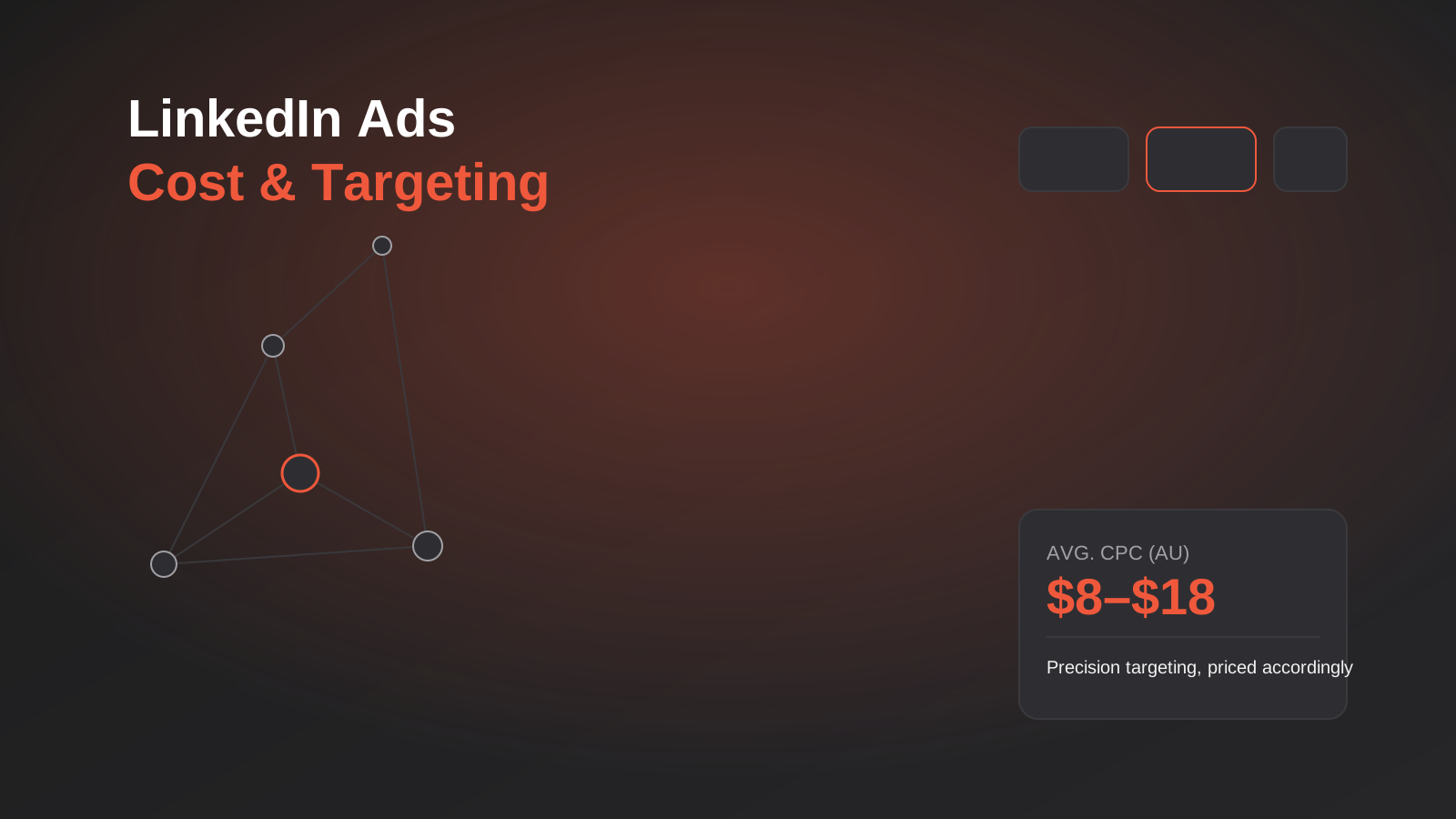
LinkedIn Ads Cost and Targeting in Australia: A 2026 Deep Dive for B2B
Real LinkedIn Ads cost benchmarks for Australia plus the targeting, bidding and Matched Audiences setup that actually cuts cost per lead.
TikTok Ads for Australian Businesses: Costs, Targeting and What Actually Works (2026)
What TikTok ads actually cost in Australia, how targeting and campaign structure work, and the mistakes that waste budget in the first…
Got a project you'd like to talk through?
Tell us what you're working on — we'll come back with a plan.
